Massive Risk, Massive Reward By AMCHAM T&T Staff Writer
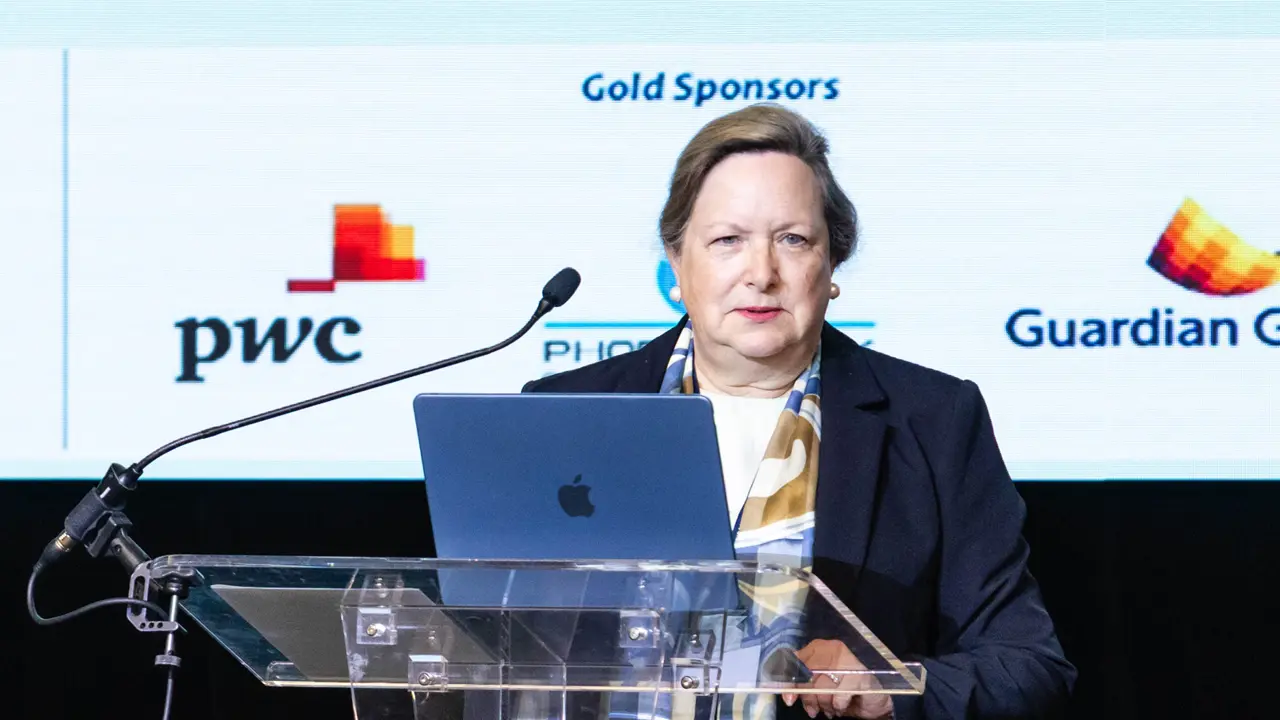
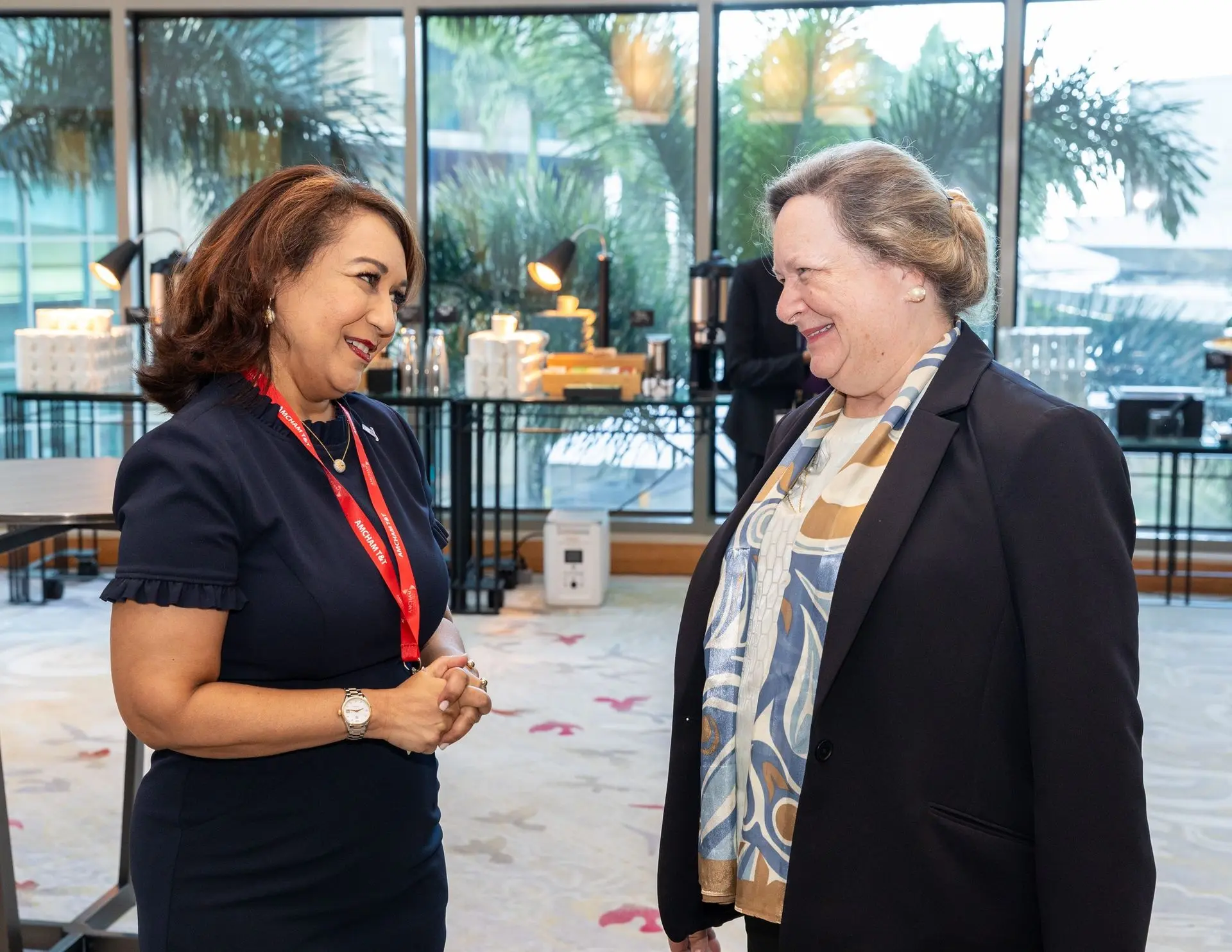
LINKAGE Q4 (2025) - HSSE 360: INNOVATION FOR RESILIENCEIn a world where the definition of value is changing, impact investing is proving one truth time and again: Massive risk can deliver massive reward. That was Gillian Muessig's, Managing Director at Mastersfund central message of her Feature Speaker Address at AMCHAM T&T’s Part II ESG Conference 2025. Muessig began by taking the audience back to the origins of modern venture capital, citing Georges Doriot [a French-American investor and president of the first institutional venture capital fund] who has been described as the "father of venture capital." “Massive risk, massive reward,” she reminded the audience—Doriot’s mantra from the 1940s, when he boldly backed wartime innovators despite knowing “2% of his investments would pan out and 98% would be rubbish.” That pattern of risk outweighing reward has persisted—venture investors today still accept that 80% of venture-backed companies fail within five years, and only around 4% return at least 3X to investors. “We talk far too much about the rewards and far too little about the risks,” Muessig observed. But her address was not a cautionary tale—it was a call to rethink how capital flows through our economies. Muessig highlighted the deep socio-economic consequences of unequal opportunity:“Trinidad and Tobago has a Gini coefficient [a statistical measure of income inequality within a nation or social group] of over 40. This is not just any number; it’s a clanging red bell in front of our faces... The imbalance of capital wealth is the directly responsible contributor to the record high homicide rate of over 40 per 100,000 across the nation of Trinidad and Tobago and over 50 per 100,000 in the greater Port of Spain area!” She continued with stark clarity:“Lack of a path to or even hope for a better future for oneself and one’s children creates a power vacuum that gangs fill... A 2024 Civicus Monitor report confirms that the violence in Port of Spain and Trinidad and Tobago at large is not random; it is a visceral symptom of the lack of hope for improvement in the quality of life.” This frame shift — drawing a direct line between economic exclusion, rising crime and social instability — elevated the conversation beyond spreadsheets and portfolios. For Muessig, investing is not just about financial return: it is about creating opportunity where few exist.Muessig argued that the obsession with unicorn hunts—seeking sky-high valuations and improbable exits—has diverted capital away from ventures that employ locals and build communities, which would lift standards of living for all. “The risk of investing in unicorns is far greater than the cost of a risky investment that may not pan out,” she said, urging business leaders to look instead at mid-cap, privately held companies with real growth potential and social impact. Muessig didn’t shy away from hard truths about capital inequality either. She highlighted the stark reality that women receive less than 10% of venture capital worldwide (of which women garner the lion’s share), while men receive over 90%.“Women are more capital-efficient than their male colleagues.” she stated, citing data showing that female founders generate 2.5 times the revenue per invested dollar and achieve an average of 35% higher ROI when they exit—yet the money does not follow the money. Muessig urged investors to confront the psychological bias at play: “People are comfortable with people like themselves… DIFFERENT IS DANGEROUS.” But she proposed a way forward—building communities of shared values and trust, even when they originate outside traditional investor circles. But her most powerful contribution was not just critique—it was a solution. Muessig introduced Mastersfund’s own financial innovation designed to unlock capital for early-stage companies without forcing them into the rigid, high-risk structures of conventional venture capital. The instrument, a Redeemable Warrant for Options, enables investors to participate in growth while mitigating risk and provides earlier, steadier returns than traditional vehicles. At its core, her message was clear: investing for impact is not philanthropy; it is economics with purpose. She called on corporations, family offices, and government players not merely to write checks, but to intentionally invest in the world they want to see for themselves and future generations. In a nation grappling with stark inequality and social instability, Muessig framed the investment question as one of survival and opportunity: can capital be redirected toward ventures that uplift communities, create jobs, and build resilience? Her answer was an emphatic yes—but only if investors are willing to confront risk honestly and pursue reward with both heart and strategy. Gillian greeted by Indu Sharma - Chair of AMCHAM T&T's ESG Conference at the Part II of AMCHAM T&T's ESG Conference 2025.