Navigating Uncertainty: Building for What Comes Next by AMCHAM T&T Staff Writer
LINKAGE Q3 (2026) - NAVIGATING UNCERTAINTY: SUSTAINABILITY, RESILIENCE AND THE FUTURE OF BUSINESS
AMCHAM T&T President Anna Henderson on ESG, Resilience and the Future of Business
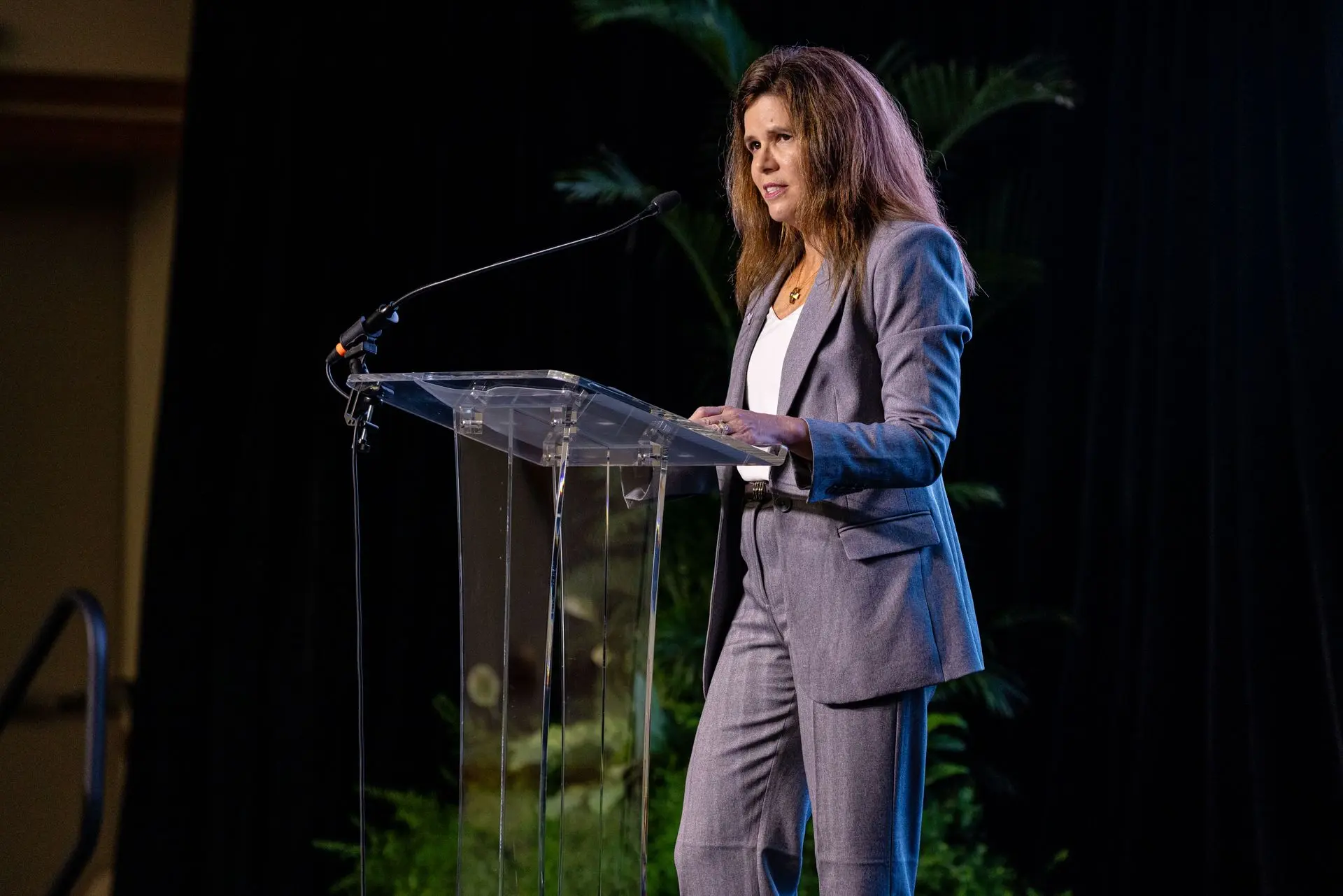
For Trinidad and Tobago, the challenges of a rapidly changing business environment are unfolding alongside an important national conversation about how to build an economy capable of withstanding the shocks that will inevitably come.This was the context in which Anna Henderson, President of AMCHAM T&T, delivered the Opening Remarks at the Chamber’s 4th Annual ESG Conference, held under the theme “Navigating Uncertainty: Sustainability, Resilience and the Future of Business,” on September 15, 2026 at the Hyatt Regency, POS.Henderson was careful not to dwell on uncertainty. Instead, she pointed to the opportunities emerging alongside the challenges, including positive signs in the energy sector and the possibilities presented by technology and diversification.“There is a growing recognition that the future of our economy cannot simply be about maintaining what we have. It has to be about building what comes next.”ESG Is Not an ExtraFor Henderson, one of the challenges is that when business conditions become difficult, organisations can begin to treat ESG considerations as secondary to immediate commercial pressures. “Because when things become difficult, it is easy to view things like environmental responsibility, good governance, social impact, and employee well-being as the ‘extras’ – the things we will get to when business conditions improve.”Her response was unequivocal: “But these are not extras. They are the foundations of good business.”From there, Henderson positioned ESG as something much more practical than a compliance exercise. At its core, she argued, it is about asking how organisations operate responsibly, how they manage risk before it becomes a crisis, and how they create lasting value. “How do we operate responsibly? How do we manage risk before it becomes a crisis? And how do we ensure that we create value by the strength, resilience and sustainability of the businesses and communities we leave behind?”She also pointed to the importance of integrating financially material ESG considerations into strategy, operations and risk management, while cautioning against approaches focused simply on compliance. “Companies that integrate financially material environmental, social, and governance factors into strategy, operations, and risk management tend, on average, to perform at least as well as—and often better than—companies that do not. Box-ticking doesn't work. A thoughtful, purposeful ESG integration strategy that aligns with your individual business objective does work. It positively impacts the bottom line.”Preparing for Disruption—and What Follows ItFor Henderson, this broader approach becomes particularly important as uncertainty increases. “When uncertainty increases, that big picture approach becomes more important. Because resilience is not simply about surviving disruption. It is about being prepared enough to seize the opportunity that follows it.”That perspective extends beyond individual businesses to the wider development of the country.Henderson acknowledged that ambitious goals will inevitably bring difficult questions, difficult decisions and uncertainty. But she argued that the scale of those challenges should not discourage action. “Rather than allowing the scale of the challenge to weigh us down, let the scale of the ambition inspire us. Let it push us to build. To dream. To experiment. To innovate. And, most importantly, to do.”She reinforced this with a warning against becoming paralysed by the identification of problems.“Because transformation does not happen simply because we have identified the problems. It happens when we begin building the solutions. Too many times, we focus on the reasons why we shouldn't do something. But in so doing, we forget the danger of doing nothing.”Anna Henderson with Natasha Ashby, Director of AMCHAM T&T and Vice President Law & Corporate Affairs at AtlanticFinding Balance in the Path ForwardThat call for action does not mean ignoring risk.In discussing environmental approvals and assessments, Henderson emphasised the importance of balancing efficient, predictable processes with responsible development. “When we get that balance right, everyone benefits.”“Businesses have greater certainty to invest. Communities benefit from development that is responsibly planned. And the country protects the natural assets – our land, water, coastlines and ecosystems – that support industries and livelihoods for generations.”Her conclusion was straightforward: “That is sustainability in practice. It is not about stopping development. It is about making sure that the development we pursue can stand the test of time.”Seeing Opportunity Where It Already ExistsHenderson also challenged conventional thinking around diversification, pointing to the potential of the Orange Economy and the value already present in Trinidad and Tobago’s people. “But sometimes, the greatest opportunity is already here. It is in our people.”She highlighted designers, filmmakers, musicians, software developers and creative entrepreneurs as examples of people generating intellectual property, exports, jobs and new opportunities through their work. “These are not simply creative pursuits. They are economic activity. They are intellectual property. They are exports. They are jobs. They are opportunities for young people to build careers in industries that did not exist in the same way a generation ago.”For Henderson, this is another example of how businesses and the wider economy can respond to uncertainty—not simply by protecting what already exists, but by recognising and developing new sources of value.Anna Henderson with The Honourable Jearlean John, Minister of Works and InfrastructureBuilding for Whatever Comes NextUltimately, Henderson returned to the central role ESG can play in preparing businesses and the country for an uncertain future. “Whether we are talking about how we use our land, how we govern our companies, how we manage what we consume, how we finance our future, or how we unlock the creativity of our people, these are not separate conversations. They are pieces of the same puzzle. They are about building businesses that can adapt. Building communities that can withstand disruption. Creating opportunities that are inclusive and lasting. And developing an economy that does not simply respond to change, but is capable of creating its own opportunities within it. And ultimately, that is what I believe ESG gives us. It gives us a framework for navigating uncertainty – not by trying to predict everything that is going to happen, but by building the kind of businesses, institutions and economy that are prepared for whatever comes next.”The challenge, then, is not simply to get through uncertain times. It is: How do we use this moment to build something better?For Henderson, the answer begins with refusing to retreat into caution and instead using uncertainty as a reason to become more thoughtful, innovative and resilient. “People matter. The planet matters. And purpose matters. And let us never lose sight of what ESG ultimately promises – not a checklist, not another compliance exercise, but a different way of thinking about how we build businesses, how we build economies, and how we build the future.”READ THE FULL SPEECH: https://www.amchamtt.com/blog/amcham-t-t-news-1/esg-2026-president-s-speech-518
 ESG Is Not an Extra
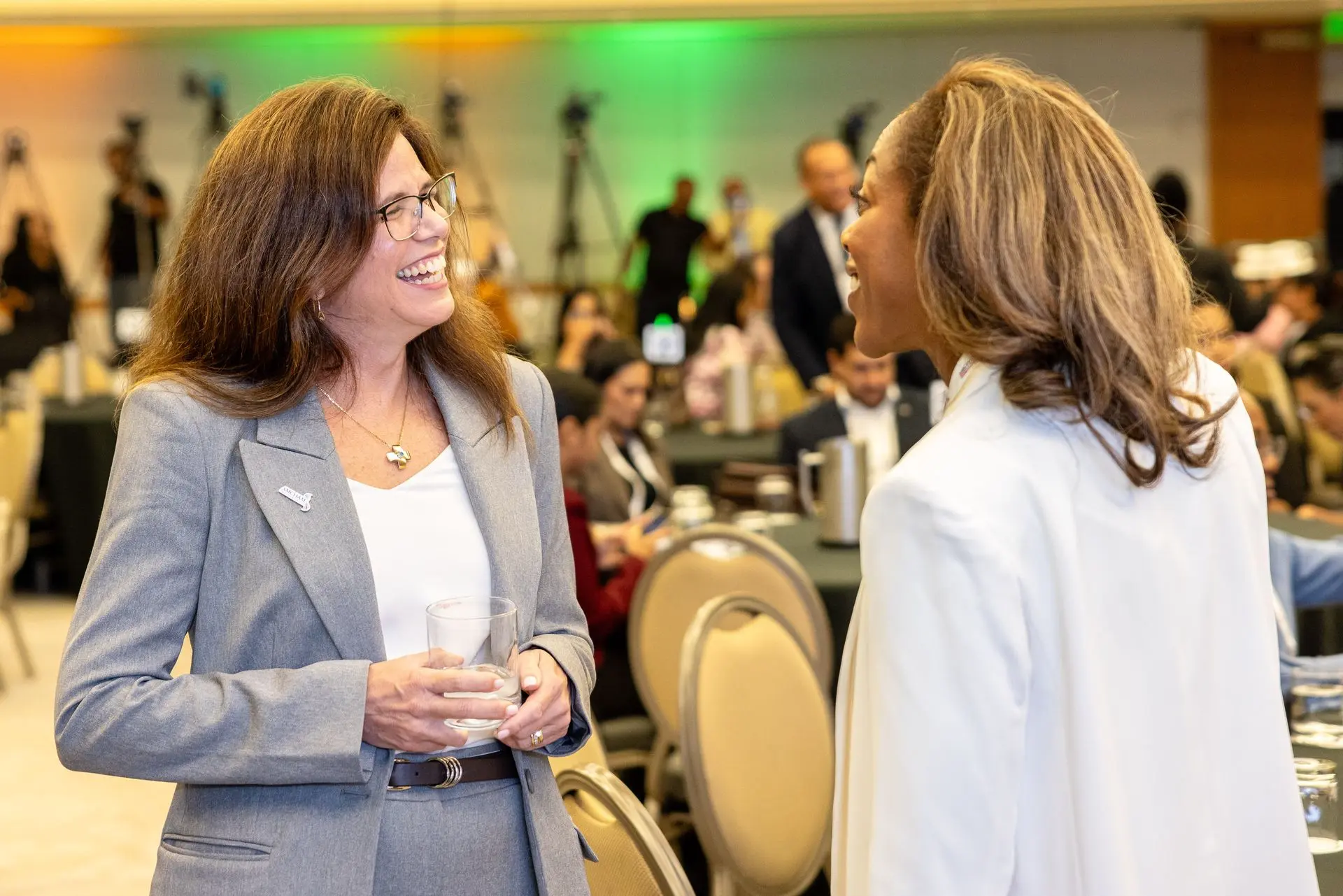 Anna Henderson with Natasha Ashby, Director of AMCHAM T&T and Vice President Law & Corporate Affairs at Atlantic
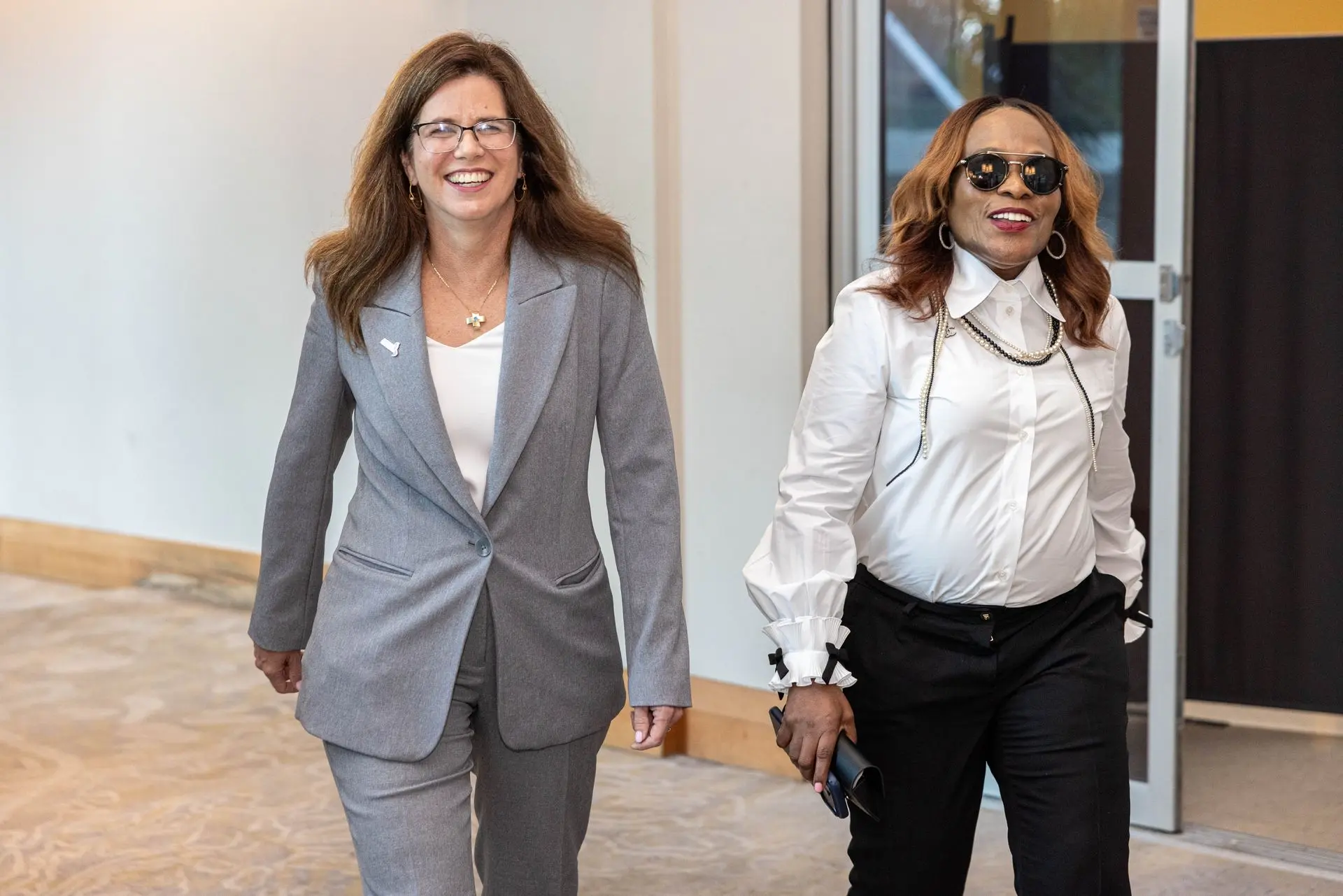 Anna Henderson with The Honourable Jearlean John, Minister of Works and Infrastructure