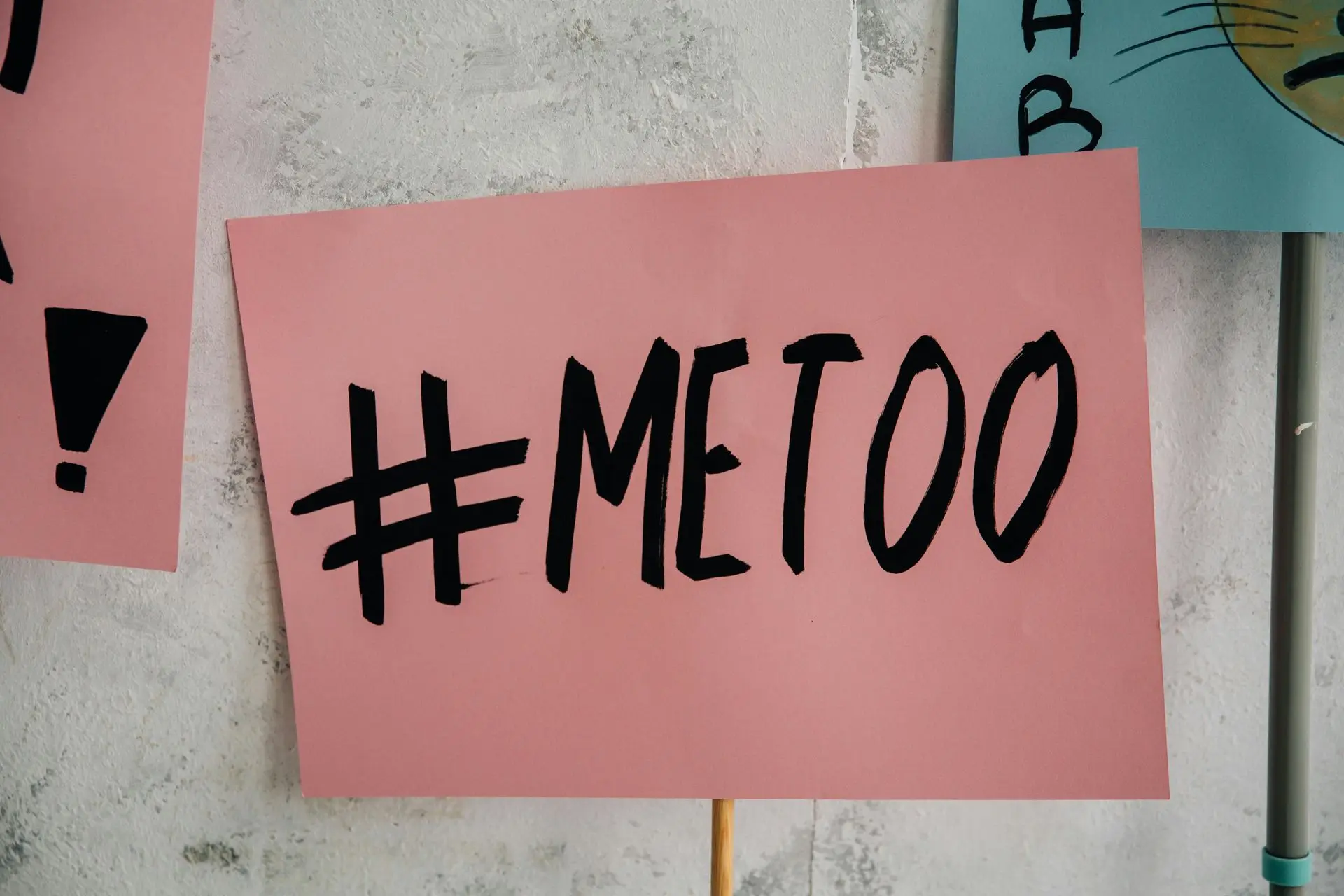
Transforming The Law on SEXUAL HARASSMENT By Ria Mohammed
LINKAGE Q1 (2026) - REVITALISATION & TRANSFORMATIONINTRODUCTION In the Caribbean sexual violence against women and girls is “normalised, widespread and of pandemic proportions”. This unfortunate phenomenon is reflected in the workplace where sexual harassment is “a not too unfamiliar scenario” that disproportionately affects women. Globally, 1 in 5 persons have experienced violence and harassment at work. Regional data pegs the figure at 24.1% of women, with 13% of women in Trinidad and Tobago reported to have experienced harassment within a 12-month period alone. Despite these numbers, there is no national sexual harassment legislation on our statute books. Persons who experience sexual harassment are left to navigate a maze of legal options, none of which are ideal. The time has therefore come to rethink and transform the law on sexual harassment.WHAT IS SEXUAL HARASSMENT?Sexual harassment is any behaviour of a sexual nature that affects the dignity of women and men, which is considered as unwanted, unacceptable, inappropriate and offensive to the recipient, and that creates an intimidating, hostile, unstable or offensive work environment. It can take the form of a quid pro quo (this for that), physical touching, suggestive body language, comments with sexual overtones or invitations to go out. In the Caribbean it is often difficult to identify harassment because risque behaviour is treated as “part of our normal social intercourse.” Beyond being normalised, if a person experiences sexual harassment and wants redress, there is no singular legal option at their disposal.LEGAL REDRESS FOR SEXUAL HARASSMENTAssault and BatteryOne option for redress is a civil claim for assault and battery. This was done in Lequay v Bruce; one of the earliest reported sexual harassment cases. Here the claimant sued the defendant, her immediate supervisor, after he put his arms around her at a staff Christmas party and said he should “rape her because she looked quite attractive.” This behaviour was sharply condemned by de Iles J who held that defendant had “violated the person of the plaintiff in the most disgusting manner” and “had abused his position of authority over her.” The claimant was awarded $12,000 in damages to “express the Court’s utter displeasure ... and ameliorate in some small measure the gross indignity.”Trade DisputeA second option is pursue a trade dispute at Industrial Court as occurred Bank Employees Union v Republic Bank Limited. Ironically this case was brought by a trade union on behalf of a perpetrator of harassment who was dismissed after he was accused of, and admitted to, kissing a female employee on the cheek, touching another on the bottom and putting both hands on hips of a third. His explanation was that he had a close rapport with the female employees in question, such that they were like brother and sisters. His challenge that his dismissal was contrary to good industrial relations practice was unsuccessful. The Court held that his conduct amounted to sexual harassment which was defined as “sexual misconduct, directed, in the workplace, at an unwilling victim to whom that misconduct is offensive, unsettling, upsetting, psychologically damaging or otherwise stressful.” The egregious nature of the conduct, the nature of the business of a commercial bank and the defendant’s position of authority, warranted dismissal. On the flipside, in All Trinidad Sugar and General Workers Trade Union v Aqui Chung Ltd a claim was brought by an employee who alleged that she was forced to leave her job as a result of sexual harassment by her employer including unwanted touching, suggestive comments and lewd phone calls. She alleged that when she complained, she was transferred, refused vacation leave, accused of theft and had her actions monitored by fellow employees. However, her claim did not succeed due to a lack of evidence. Great store was placed on the fact that a co-worker who had witnessed one of the incidents was not called as a witness, the employee did not take immediate steps to leave the job, failed to particularise the details of her denial of vacation and did not provide sufficient evidence to substantiate her claims of being monitored.Equal Opportunity ActA third option is to pursue a complaint under the Equal Opportunity Act which prohibits, inter alia, sex discrimination in the sphere of employment. There is precedent for such action in Rishi Persad Maharaj v Cascadia Hotel Limited, where a male employee sought damages for sex discrimination after he was dismissed from his position as a quality control manager. He alleged that he was subjected to unwanted advances and inappropriate language by his female manager who called him “sexy”, “baby” and “bae”, slapped him on the buttocks and pinched him on the waist. After making verbal and written complaints, he began to receive complaints about his job performance and was eventually terminated for redundancy. The Equal Opportunity Tribunal dismissed the complaint on the basis that sexual harassment did not fall within the scope of the Act. This finding was reversed on appeal. The Court of Appeal held a sex discrimination claim based on less favourable treatment could be grounded on alleged sexual harassment. CRITIQUE OF THE CURRENT LEGAL OPTIONSThese three options to address sexual harassment in our current legal landscape are far from ideal. A civil claim for assault and battery can only be maintained where the alleged harassment takes specific forms. Also, on a normative level, viewing sexual harassment through the prism of tortious action is problematic. As Catharine McKinnon explains “to see sexual harassment as an injury to morality is to turn it into an extreme case of bad manners, when the point is that it is the kind of bad manners almost exclusively visited upon women by men with the power to get away with it.” Pursuing action before the Industrial Court raises questions of standing because a trade dispute must be brought by union on behalf of a worker. Additionally, these claims are most frequently pursued where the employee has paid the ultimate price, namely loss of employment. Under the Equal Opportunity Act, the problem centres on the fact that discrimination is defined as less favourable treatment. This definition is rooted in a formal version of equality, i.e. treating like alike. The problem is that this conception of discrimination does not preclude equally bad treatment. Therefore, if the female manager in the Cascadia case were an equal opportunity harasser who harassed both male and female employees, there would be no infringement of the Act. MAKING THE CASE FOR SEXUAL HARASSMENT LEGISLATION
The shortcomings of the legal options coupled with the reported data makes a compelling case for the enactment of national sexual harassment legislation. In effecting this transformation, there is no need to reinvent the wheel. Legislation already exists in The Bahamas, Barbados, Belize, Guyana and Jamaica. The 1991 CARICOM Model Law ‘Protection against Sexual Harassment Act’ is also a useful resource. National legislation will provide a legally binding definition of what amounts to sexual harassment, create safe reporting mechanisms, protect victims from retaliation and require employers to take proactive and preventative steps to combat harassment. Reshaping the law in this area will send a strong message that sexual harassment is unacceptable and has no place in corporate Trinidad and Tobago.1. Rashida Manjoo and Tracy Robinson, UN Caribbean Study Visit Report (2016). 2. Madam Justice Desiree Bernard, ‘Confronting Gender-based Violence in the Caribbean’ (2006). 3. International Labour Organisation, Experiences of violence and harassment at work: A global first survey (2022) 4. UN Women, Violence and Harassment in the Workplace: Data from National Prevalence Surveys on Gender-Based Violence (2019) 5. Bernard, supra note 2. 6. Claim No. 1084 of 1978. 7. TT 1996 IC 13. 8. TT 2011 IC 10. 9. E.O.T. No. 1 of 2017. 10 Civil Appeal No. P407 of 2019. 11 McKinnon, ‘Sexual Harassment of Working Women’ in Graygar and Morgan The Hidden Gender of Law (Federation Press 2002)
ABOUT THE AUTHOR Ria Mohammed is an Attorney-at-Law