Unlocking The Potential Of The Orange Economy: Freetown Collective on Culture, Sustainability and the Business of Creativity
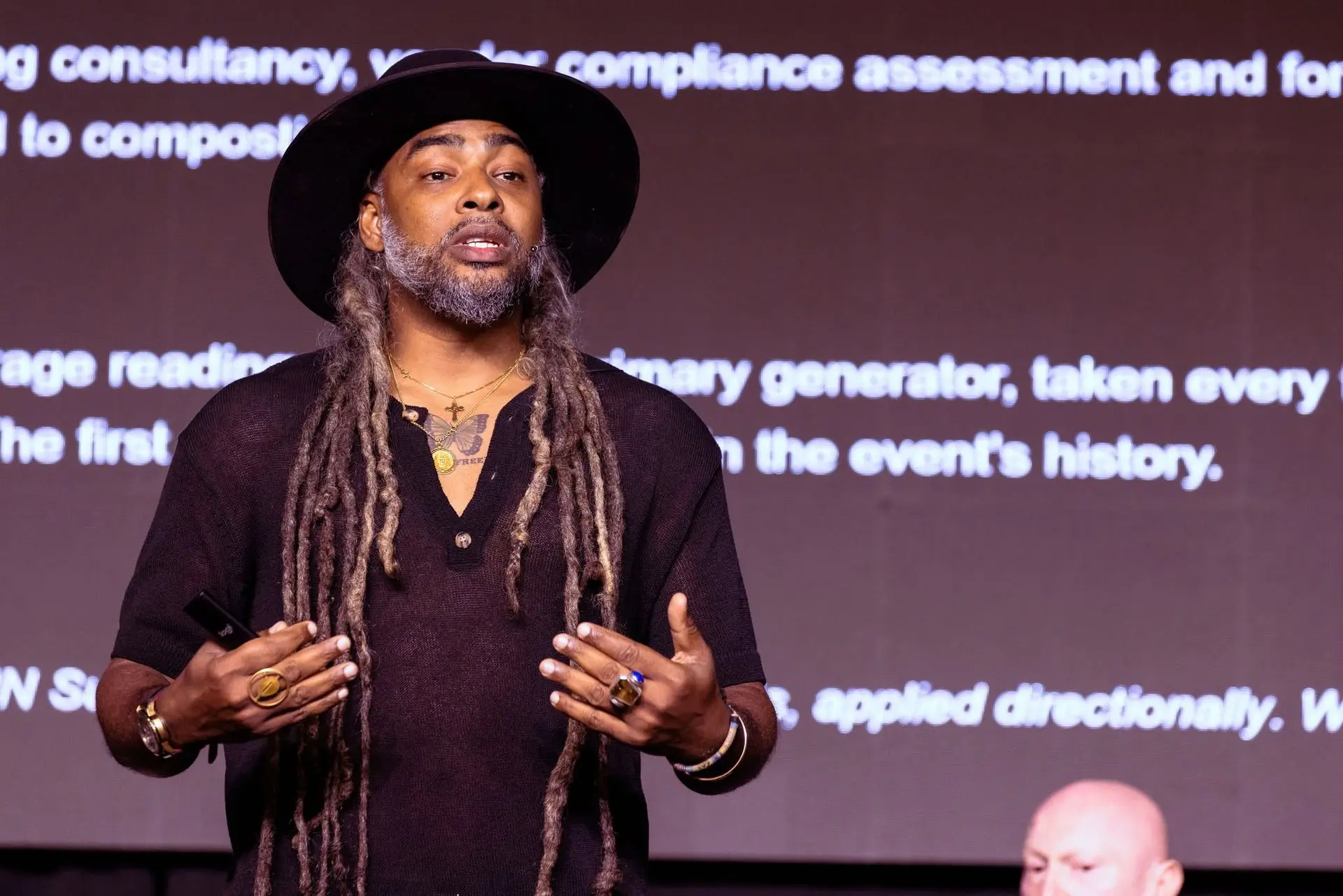
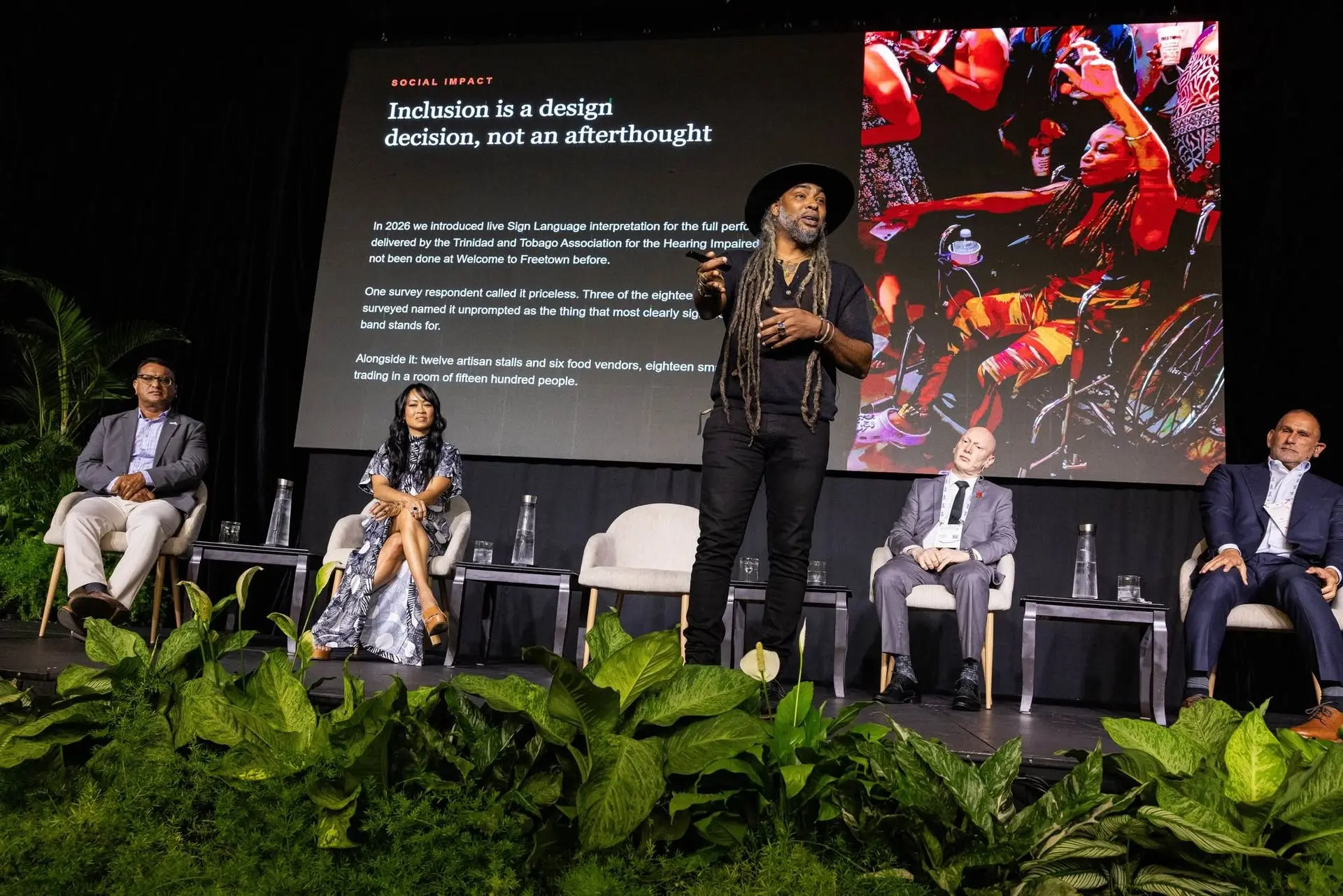
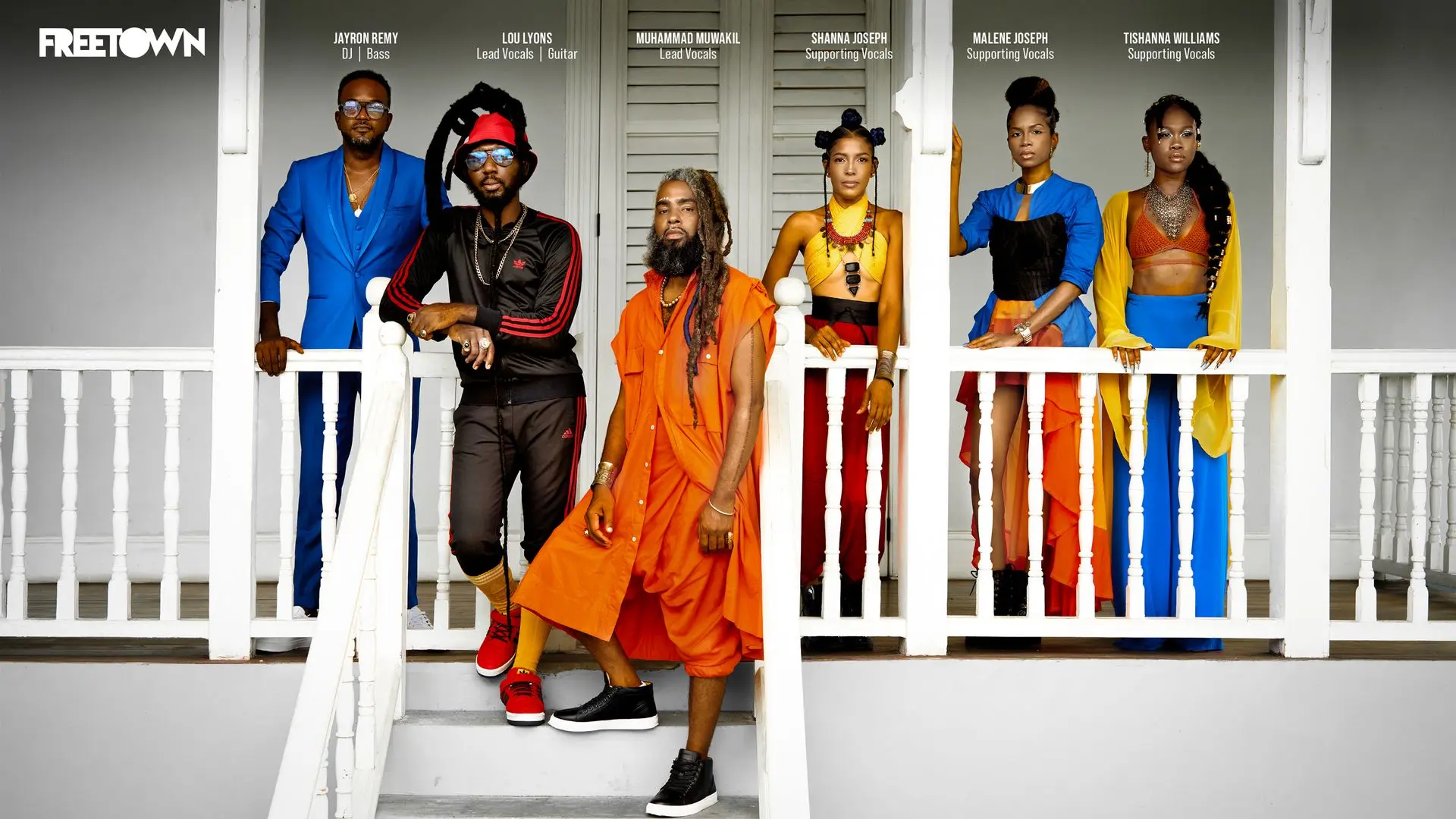
LINKAGE Q3 (2026) - NAVIGATING UNCERTAINTY: SUSTAINABILITY, RESILIENCE AND THE FUTURE OF BUSINESS From Good Swimma and Feel The Love to World on Fire, Mas and Take Me Home, the musical band Freetown Collective has built a catalogue that has resonated well beyond Trinidad and Tobago. Their music has travelled internationally, with Good Swimma reimagined by Major Lazer and Showtek as Believer, while Feel The Love, a collaboration with DJ Private Ryan, became a major local hit. More recently, Take Me Home has further connected with audiences across the Caribbean and diaspora. The group has also taken its music to international stages, including London, Canada, Japan and the legendary Glastonbury Festival.That level of recognition did not happen overnight.Behind the music is a business that has evolved considerably from the early days when Freetown Collective's members were simply artists receiving payments and dividing them between themselves.At AMCHAM T&T's ESG Conference, Muhammad Muwakil, Lead Vocal of Freetown Collective, offered an insight into that evolution – and into a side of the group's work that audiences may not always see.Speaking during the panel session “Rhythm & Revenue: Unlocking the Potential of the Orange Economy,” Muwakil presented “Welcome to Freetown Collective: Sustainability Report 2026,” taking the audience behind the scenes of the group's flagship carnival event, Welcome to Freetown, and its efforts to build sustainability into the event's operations.More Than MusicFor Muwakil, the starting point is a belief that creativity should not be confined to entertainment. “Everything we do has to be about more than just music.”Music can be a vehicle for many things, but reducing artists to their music alone limits the value of their creativity and imagination. “There's a kind of a myopia that sets in, not only with the artist, but also with the corporate sponsor.”Artists should be recognised for their ability to approach problems differently – a capability that remains underutilised in Trinidad and Tobago, the wider Caribbean and internationally. “When I look at something to solve a problem, it's not going to be what other people see. That's one of the largest resources we are not tapping into in Trinidad, Tobago.”It is this broader understanding of creativity that provides the context for Freetown Collective's sustainability work.Culture: An Underdeveloped ExportMuwakil places Freetown Collective’s work within a broader conversation about the value of culture. “Culture is one of our region's oldest yet most underdeveloped exports.”Part of the challenge is that Caribbean culture is so deeply embedded in everyday life that its economic value can be easy to overlook. Art like a family recipe – something so common that its potential value may not be recognised.“We always had pan, we always had calypso, we always had soca. Everybody's uncle sings parang, everybody's uncle is an artist, everybody's auntie does this or that. And so there's no value to it, to most of us.”Yet the very things that Trinidad and Tobago and the Caribbean have historically taken for granted can carry the region's identity far beyond its borders“It carries our names further than anything we drill or refine,” Muwakil said.For him, culture is not simply an economic product. It is also part of what protects a nation's identity in an increasingly globalised world. “Culture is the defender. Culture is the cell wall around any nation.”Turning Sustainability Into Something MeasurableThat philosophy of looking beyond the obvious also shaped Freetown Collective's approach to Welcome to Freetown. The group set out to make the event sustainable across multiple dimensions, but the objective was not simply to make claims about sustainability.“We wanted to map it out to become more credible. Claiming something without a number, that's just marketing.”For Freetown Collective, measurement became a way to establish credibility with partners and sponsors while identifying areas where the event could improve. “What gets measured gets improved. If you can't measure it, how are you going to improve it?”The band’s 2026 Sustainability Report relies on independent measurement rather than simply reporting the organisers' own figures. Here are some excerpts:The event had 17 recycling bins, with material separation, post-event sorting and weighing conducted at the recycling facility. In 2026, 355 pounds of recyclable and organic material were diverted from the landfill, compared with 249 pounds in 2025 – a 43 per cent increase. The event also recovered 234 pounds of glass and achieved 100 per cent vendor compliance.One of the lessons from Welcome to Freetown was that sustainability systems do not necessarily work simply because the infrastructure is there.Food vendors were prohibited from giving out single-use plastic cutlery. “No plastic in the event.” To improve food-waste recovery, for example, paid personnel had to be stationed at bins to guide patrons on where different materials should go. “We're not leaving it to chance. We want something to happen. We're making it happen.”The approach demonstrates an important lesson for businesses considering sustainability initiatives: policies and targets are only as effective as the systems and people put in place to deliver them.Building Community Through InclusionThe sustainability strategy extended beyond waste management.Freetown Collective also considered how an event could reduce barriers to participation and create a stronger sense of community.One example was shared transportation, which encouraged people attending alone to connect with others travelling to the event.“We're trying to encourage in our community to decrease its carbon footprint and increase its community footprint.”The group also made accessibility a deliberate part of the event's design.“Inclusion is a design decision, not an afterthought.”Accessibility measures included facilitating entry for wheelchair users and introducing live sign language at the event.For Freetown Collective, the value of inclusion extends beyond the person whose immediate needs are being addressed, but also influences the behaviour of everyone around them.“When someone who is differently abled is able to come into an event, it now acclimatises the rest of people at the event to be a bit different, to be a little more helpful.”Being Honest About the GapsPerhaps the strongest feature of Freetown Collective's sustainability approach is its willingness to acknowledge what did not work.Although the event mandated compostable packaging, only five pounds of food was ultimately composted. The problem was not simply the packaging; the necessary segregation infrastructure was not in place, meaning much of the compostable material ended up mixed with general waste and went to the landfill.Muwakil was equally candid about areas where the organisation still lacked sufficient data, including fuel volume, venue energy use, patron transportation and food and beverage volumes.That transparency is significant. Rather than creating a sustainability narrative built only around achievements, the band's report identifies limitations in its current systems and, in doing so, creates a basis for improvement.Making the Business Case for Sustainable CreativityMuwakil also addressed a fundamental challenge facing sustainability within the creative industries: the need to make responsible practices commercially meaningful.He acknowledged that the event industry does not always view sustainability measures as a priority. “We are operating in a framework that does not care about this at all.As far as promoters are concerned, this is a waste of time.”But he argued that this can change when businesses and creatives demonstrate that sustainable practices can become part of a successful business model.“Until such people begin to attract sponsorship because they are doing it.”For Freetown Collective, this is where the conversation with corporate partners becomes particularly important. The group is not positioning itself simply as an entertainment act seeking sponsorship. Instead, it wants to demonstrate how its creative capabilities, audience, event platform, and sustainability practices can create value for partners. “You have to make it attractive if it really means something to you.” And, importantly, the band believes other event organisers should not have to start from scratch.The group's approach is also being developed as an internal capability rather than something dependent entirely on outside consultants. “Our capability is owned in-house, so every time we move, we don't need to bring in somebody else to do it.”That matters because Welcome to Freetown is not limited to Trinidad and Tobago. The event has expanded to other markets, including London, Canada and the United States. “Anywhere this event goes, it will be sustainable because we can make it so, and we're not reliant on someone else to do that.”The sustainability work becomes part of the band's intellectual and operational capital – something the organisation can carry with it as it grows internationally.Measuring the Night They LoveFreetown Collective's Sustainability Report ultimately reflects an attempt to rethink what a creative business can be – and what culture can contribute to the economy when it is treated not simply as entertainment, but as intellectual, social and commercial value.The group's message is not that it has solved sustainability. Instead, it is that the work must begin with measurement, honesty, and a willingness to improve.Muwakil summed up that commitment simply: “We commit to measure the night we love and tell the truth about it. Join us as we grow.”For an organisation whose work has already carried Trinidad and Tobago's culture to audiences around the world, the next chapter may be about proving just how much further creativity can travel when it is paired with responsible business practices, measurable impact, and a willingness to challenge conventional thinking.