The Business Case for ACE: Why T&T Companies Should Care About Climate Empowerment By Reyad Mohammed
LINKAGE Q3 (2026) - NAVIGATING UNCERTAINTY: SUSTAINABILITY, RESILIENCE AND THE FUTURE OF BUSINESS The Private Sector has positioned itself as an agent of governance globally. Companies, regardless of operation, are required to include climate considerations in their daily operations. Investors want to see lower-risk portfolios, insurers want resilience, and the rise in public awareness around climate change is leading to consumers wanting to see a company’s transparent climate story before buying in or supporting. Many companies are responding to this by employing international ESG frameworks, designed for countries in Europe or in North America. However, there is a United Nations framework that not only acts as a precursor but also augments the solution more precisely than generic ESG language – Action for Climate Empowerment (ACE).
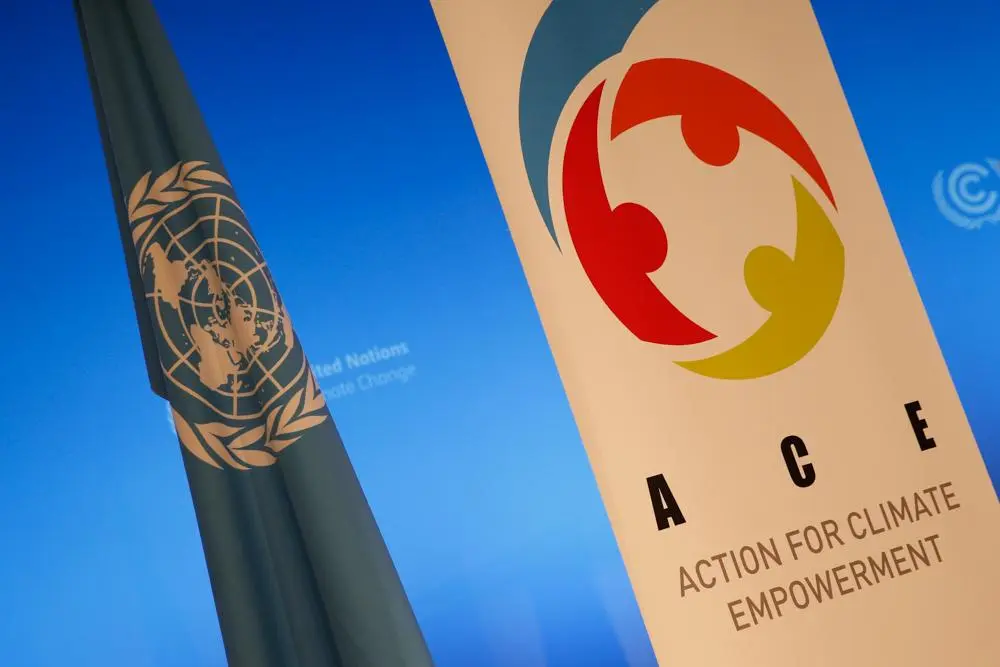
What ACE Actually MeansACE is a framework under Article 6 of the United Nations Framework Convention on Climate Change and Article 12 of the Paris Agreement. It breaks climate engagement into six pillars: • Education• Training• Public Awareness• Public Participation• Public Access to Information and • International Cooperation. The underlying logic is simple: Societies cannot manage a problem their people don’t understand, and they cannot sustain climate action if people are not involved.Governments were the primary interface for ACE, but ACE had been ongoing before the term was coined. With civil society championing much of this, it’s important that more than just a subset of private sector companies also understand how seamlessly it integrates into their operations. For instance, how a company trains staff, engages with communities and reports transparently. ACE should therefore not be treated in isolation but rather viewed as evolved and cross-cutting actions that promote climate engagement through the six pillars.Why Does ACE Matter to a Trinidad & Tobago Balance Sheet Just as Much as a Policy Paper?Climate engagement is already being treated as a core strategy and not just an add-on. The UN Global Compact aims to help local businesses align with global corporate sustainability standards, and the Caribbean Network has 20 participants from Trinidad and Tobago (T&T) demonstrating their public commitment to sustainability which overlaps with the ACE pillars. Formalising a climate approach is no longer a strategy companies are weighing; it’s a trend and a constant game of catch-up to peer companies and groups that have already started.National policy provides the scaffolding that companies eventually build on. T&T’s commitment to international frameworks like the UNFCCC and the Paris Agreement, coupled with local policies such as the National Climate Change Policy (2025) and the National Environmental Policy (2018), commits the country to a low-carbon transition. This is meant to be supplemented by the government’s Public Sector Investment Programme, which contains a “Green Transition Portfolio.” However, the Green Economy Tracker notes that the country’s overall approach to addressing this house-on-fire is still fragmented and there could be more stringent enforcement on high-emissions industries.Overconsumption contributes to many of the environmental problems we face today. The costs are measured in dollars, but the effects are measured in lost lives and livelihoods. We interact with private-sector entities far more often than with any other sector. Buying from specific places shapes our thoughts through identity signalling, which makes us adopt the values of the brands we support to match how we see ourselves. Adopting a sense of climate urgency, concern, or action fills an information gap through disclosure, which gives consumers the ability to make sustainable choices. Regionally, a Caribbean consumer study covering Trinidad and Tobago, Barbados, Jamaica, and Dominica found that local consumers are actively weighing food-system and sustainability factors in their choices. This isn't a purely northern-market phenomenon; it underscores the importance of “public access to information.”Country targets are not just obligations but commercial openings. T&T’s Nationally Determined Contribution (NCDs) commits to a 15% cut in emissions from power generation, transport and industry by 2030. Meeting that means real investment in mitigative climate action, which requires relevant skills, technology, financing and services - all of which can be supplied by the private sector. Embedding ACE into a workforce establishes a staff that can justly transition rather than one that has to build from zero once the shift accelerates.ACE enables companies to make justified climate claims, something that generic ESG language cannot. Saying a company “supports the Sustainable Development Goals (SDGs)” is vague. Saying it runs climate training for staff (ACE's training pillar), publishes clear data on its own emissions and mitigation actions (public access to information), or has a structured way for communities and workers to feed into its environmental decisions (public participation) gives stakeholders something concrete to evaluate, especially if its claims are questioned.Where Sponsorship and Partnership Fill the Implementation GapIncorporating ACE doesn’t mean all pillars must be implemented, especially from scratch. Reinventing the wheel wastes effort when avenues for sponsorship and partnership are practical entry points.Focusing on sponsoring specific pillars demonstrates intent. Instead of making arbitrary financial contributions to a general climate cause, companies can focus their support on a defined element of an initiative. For instance, a company could choose to fund climate-related training workshops or public awareness campaigns. Partnering with an NGO, school or community group ensures contributions are directed towards initiatives that are immediately connected to communities. This strategically provides a clear, specific, tangible output that enhances business credibility and accountability.Partner rather than build in-house. For businesses without the budget for a stand-alone sustainability department, partnering with an established civil society or academic ACE initiative is a far cheaper way to generate legitimate, verifiable climate engagement than building a programme internally.Support the green-skills pipeline. There are local academic institutions and skill centres already training people in renewable energy mechanics and related work. Sponsorship aimed at ACE-aligned training programmes is an investment in early workforce development. This isn't just donating, it's building the capacity of the labour pool it will eventually hire. In Essence...ACE translates directly into operational practice for businesses through training, transparent communication, disclosure of information and creating space for participation. For companies trying to keep up with the status quo, incorporating ACE is a good start to any climate strategy, either through implementation or sponsorship of local initiatives. It’s a low-risk way of establishing proof of climate engagement, while developing or supporting the same thinking and skills businesses will eventually need to draw from.Sources: UN Global Compact Network Caribbean membership data and Private Sector Forum coverage (Trinidad Express, March 2026); U.S. Department of Commerce Trinidad and Tobago Investment Climate Statement; Government of Trinidad and Tobago National Development Strategy (Vision 2030) and Public Sector Investment Programme 2025; Green Economy Tracker country profile for Trinidad and Tobago; UNFCCC materials on Action for Climate Empowerment (Article 6 of the UNFCCC, Article 12 of the Paris Agreement).ABOUT THE AUTHORReyad Mohammed is a Caribbean Climate Change and Sustainability Professional

 Overconsumption contributes to many of the environmental problems we face today. The costs are measured in dollars, but the effects are measured in lost lives and livelihoods. We interact with private-sector entities far more often than with any other sector. Buying from specific places shapes our thoughts through identity signalling, which makes us adopt the values of the brands we support to match how we see ourselves. Adopting a sense of climate urgency, concern, or action fills an information gap through disclosure, which gives consumers the ability to make sustainable choices. Regionally, a Caribbean consumer study covering Trinidad and Tobago, Barbados, Jamaica, and Dominica found that local consumers are actively weighing food-system and sustainability factors in their choices. This isn't a purely northern-market phenomenon; it underscores the importance of “public access to information.”