CEO's MESSAGE
Why TECHNOLOGY Still Gives Me HOPE?
By Nirad Tewarie
CEO | AMCHAM T&T
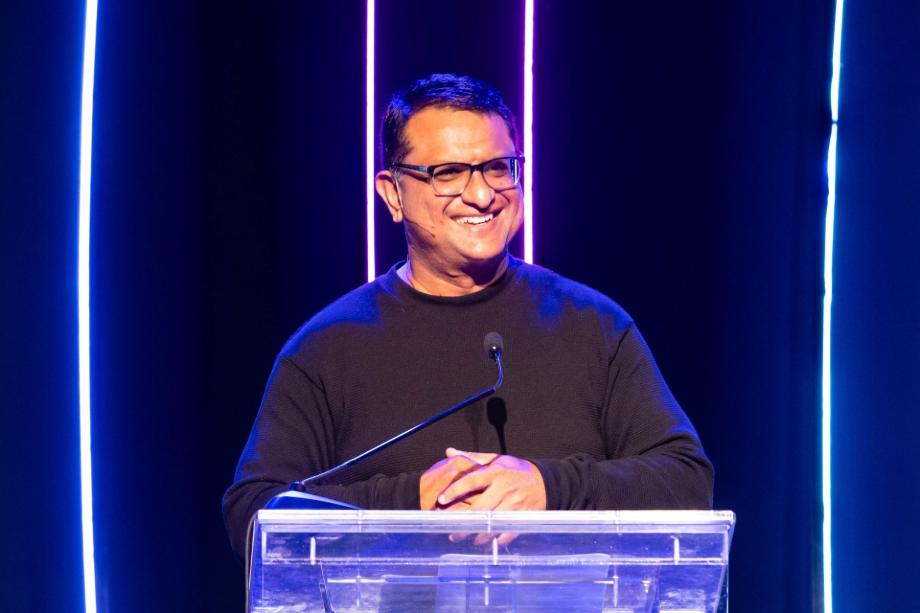
I recently had the opportunity to moderate the panel “Rhythm & Revenue: Unlocking the Potential of the Orange Economy” at AMCHAM T&T’s 4th Annual ESG Conference. It was fun! My soul lives in the Orange Economy (including sport, well, football, really).
It was an interesting conversation with some exceptionally bright, innovative, and forward-thinking speakers, whose perspectives demonstrated just how much talent, creativity, and entrepreneurial thinking exist within our creative economy. But the discussion was compelling not simply because of its potential, but because of what it represents. You see, opportunity is not always found in the places we have traditionally looked for it.
Sometimes, to use a cliche, we have to look 'outside the box'.
That, for me, is at the heart of navigating uncertainty.
We are operating in a world where change is constant. Indeed, life's only constant, is change. Markets shift. Technology moves quickly. Consumer expectations evolve. Disruptions can come from places we did not anticipate, and the decisions businesses make today can have consequences well into the future.
But uncertainty is not only about what we stand to lose.
It is also about what we might gain.
Every disruption creates a challenge. But it can also expose a weakness that needs to be addressed, create demand for something new, or force us to reconsider an approach that may have worked well in the past but is no longer fit for purpose.
The question, therefore, is not whether uncertainty exists. It does.
The question is whether we are prepared to recognise, nay, create the opportunity within it.
This is where ESG becomes more than a framework or a reporting exercise.
At AMCHAM T&T, we are focused on ESG not because it is fashionable, but because it is fundamental to building stronger, more resilient businesses that are sustainable and therefore profitable in the long term.
Organisations that manage these issues effectively are often better positioned to manage risk, adapt to change, attract investment and create long-term value.
In an increasingly uncertain world, ESG is not a trend. It is a business imperative.
But I also believe ESG can be a way of looking at opportunity.
It encourages us to think beyond the immediate decision and consider what that decision means over time. It asks us to look at the risks we may be carrying, the value we may be overlooking, and the opportunities that may emerge as the world around us changes.
And this matters for Trinidad and Tobago.
For too long, we have sometimes measured opportunity by how closely it resembles what we already know. But if we want to build a more resilient economy, we must also be willing to recognise value in new ideas, new business models, new industries, and new ways of doing things.
The Orange Economy is one example of this. The Tech economy is another. The talent, creativity, and intellectual property that exist in Trinidad and Tobago represent economic assets. The opportunity is not simply to celebrate them, but to create the conditions for those assets to become sustainable businesses, jobs, exports and investment.
The same principle applies across the economy.
We cannot know when the next major disruption will come. We cannot predict every crisis or anticipate every change in technology, markets or consumer behaviour.
But we can decide how prepared we will be when it does.
That preparation is about resilience. It is about having the people, systems, relationships and leadership required to respond when circumstances change.
And resilience should not be viewed simply as the ability to recover.
It is also the ability to adapt, evolve, and find a way forward.
That is a responsibility we share – not only as business leaders, but as a business community.
At AMCHAM T&T, part of our role is to create the spaces where these conversations can happen. As you read this issue of Linkage, I encourage you to think about uncertainty not only as something to manage, but as something that can challenge us to think differently.
The next opportunity may not look like an opportunity at first. Sometimes, it looks like a problem.
Our job is to be ready to see what it could become.