Skip to Content


THE  WELLNESS LINK COLUMN
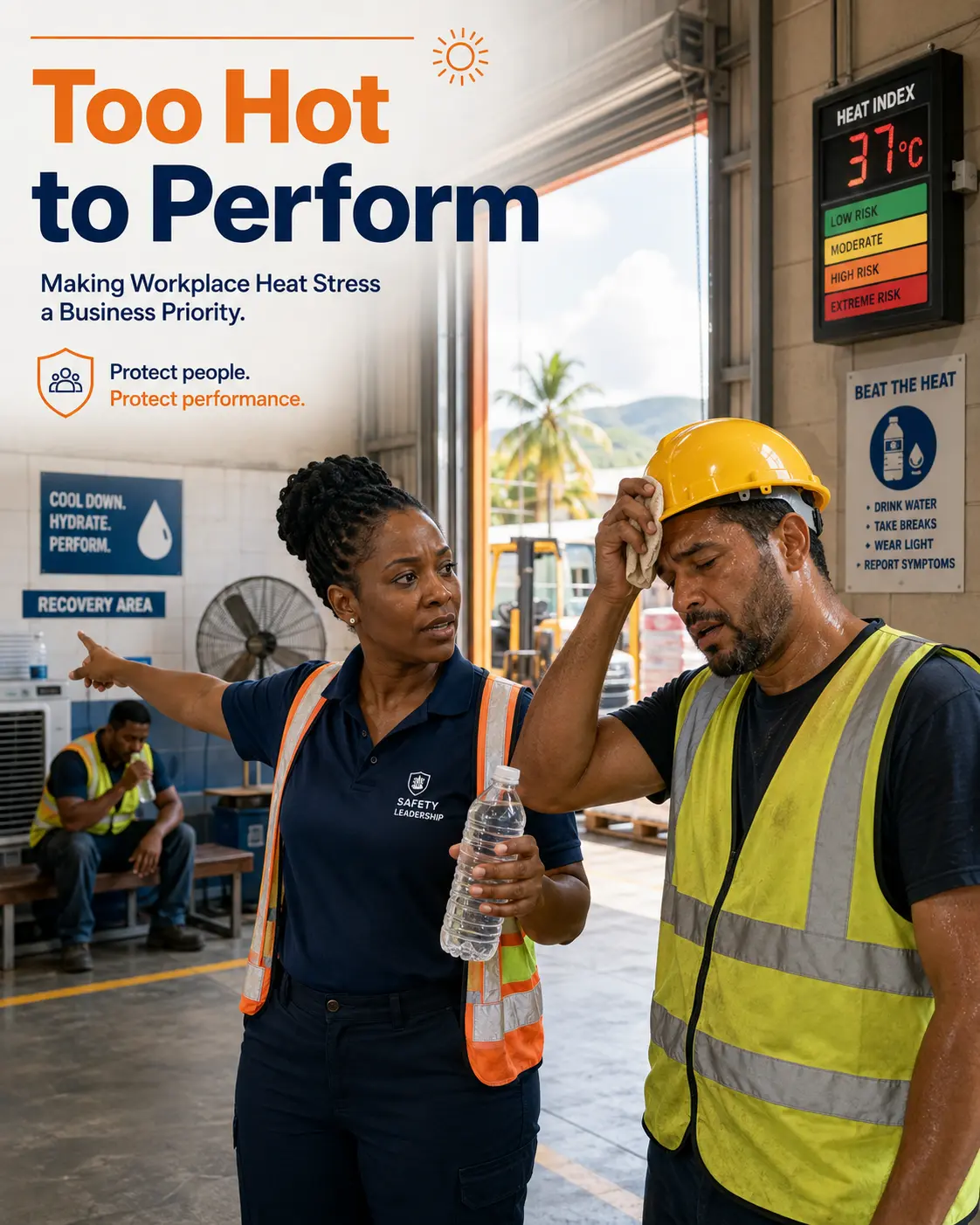
Too Hot To Perform


By Dr. Marisa Nimrod, AAS, MD, MPH

LINKAGE Q2 (2026) - IMPACT
Heat stress is more than a matter of discomfort. It is a workplace hazard with direct implications for employee health, safety, decision-making, attendance, morale, productivity and business continuity. For organisations operating in tropical environments, heat exposure should be integrated into occupational health, HSSE risk management, emergency preparedness and resilience planning.
Workplace Health as a Business Imperative
Effective workplace health must extend beyond programmes focused mainly on individual behaviour.
A healthy workforce is an operational asset. When employees are unwell, the consequences rarely remain confined to the individual. Heat exposure may result in absenteeism, where an employee cannot report for duty. It may also cause presenteeism, where the employee attends work but performs below normal capacity, working more slowly, communicating less effectively or making avoidable errors. That employee may also be less able to recognise a developing hazard or to respond appropriately during an emergency. In safety-sensitive industries, even a temporary decline in attention can endanger employees, colleagues, customers and the public.
Workplace health should therefore be treated as an investment in productivity, reliability and organisational continuity.
Effects of Heat Stress
Occupational heat stress results from the combined effects of environmental temperature, humidity, physical exertion and the additional heat burden created by clothing or protective equipment.
Two employees in the same location may therefore experience very different levels of risk. A worker performing strenuous duties in protective clothing may face considerably greater physiological strain than an employee completing light administrative work nearby.
Heat stroke is a medical emergency. It occurs when the body can no longer regulate its temperature effectively. Early symptoms may include excessive thirst, heavy sweating, headache, weakness, fatigue, nausea, muscle cramps, irritability and difficulty concentrating. Without timely intervention, these symptoms may progress to heat exhaustion, causing dizziness, rapid pulse, heavy sweating, fatigue and collapse, confusion, unusual behaviour, poor coordination, seizures or unconsciousness. Without urgent medical treatment, heat stroke can cause organ damage, disability or death.
The effects on business operations may be gradual and easy to overlook. Employees may slow their pace, take longer to complete physical tasks, make more mistakes or communicate less effectively. They may require unplanned breaks, leave work early or be absent the following day.
When one worker becomes unable to perform, colleagues may absorb additional duties, increasing fatigue, overtime costs and risk across the team. In industrial settings, slower reaction times and impaired coordination may contribute to injuries, equipment damage and production disruption. In customer-facing roles, heat-related discomfort may reduce patience, concentration and service quality.
Office employees are not exempt. Poor ventilation and high indoor temperatures can reduce cognitive performance, motivation and morale, even when work is not physically strenuous.
Psychological Safety and Leadership
Although heat stress is a physical hazard, effective prevention depends heavily on organisational culture. Employees must feel able to report symptoms without criticism or retaliation. A worker who believes that reporting dizziness or fatigue will be interpreted as weakness may conceal symptoms until the condition becomes serious.
Psychological safety allows employees to raise concerns, request assistance and identify unsafe conditions without retaliation. In a heat-exposed workplace, it can determine whether an employee receives early support or experiences a medical emergency.
Supervisors shape workplace behaviour. A manager who dismisses concerns signals that output is valued above safety. A manager who encourages early reporting, appropriate breaks and timely intervention reinforces prevention.
Heat may also affect mood and team relationships, as it can increase irritability, reduce tolerance and contribute to conflict. Managers may incorrectly interpret these changes as poor attitude when the underlying cause is physical strain.
Leaders themselves are not exempt. They may continue making decisions while experiencing heat stress. Leadership resilience should not mean ignoring physiological limits. Effective leaders recognise risk, delegate appropriately, take necessary breaks and model the behaviour expected from employees.

Climate Change, Technology and Emerging Risks
Climate change is transforming occupational heat from a seasonal inconvenience into a strategic business risk. Organisations must consider how rising temperatures may affect them and establish heat-action plans. These plans should define who monitors conditions, how warnings are communicated, when work is adjusted, who may suspend unsafe activity and how medical emergencies will be managed.
Technology can strengthen these systems. Environmental sensors can monitor temperature and humidity, while AI may support heat-risk forecasting and help design appropriate work/rest schedules. Wearable devices may also provide information about physiological strain in high-risk occupations.
Technology must, however, be introduced responsibly. Employee monitoring should not become excessive surveillance. Workers should understand what information is being collected, why it is required, who can access it and how it will be protected. Artificial intelligence should support professional judgement, not replace it. Employees must always retain the right to report symptoms, even when a digital system suggests that conditions are acceptable.
A heat-resilient workplace should:
· Conduct formal heat-risk assessments
· Improve and maintain environmental elements like ventilation and insulation
· Provide reliable access to water and recovery areas
· Schedule strenuous work during cooler periods
· Introduce structured work-rest cycles
· Train employees and supervisors to recognise and respond to heat-related illness
· Establish confidential, non-punitive procedures for reporting symptoms and unsafe conditions
· Develop emergency protocols
· Monitor complaints and productivity trends
· Integrate heat risk into contractor management and business-continuity planning
· Use sensors, digital alerts and AI transparently and ethically
The strongest workplace heat strategy combines appropriate infrastructure, trained leadership, employee participation, occupational-health expertise and effective emergency preparedness.
A heat-resilient workplace does more than prevent illness, it protects operational continuity. For Caribbean businesses, workplace heat stress is a current HSSE and leadership priority.
Protect people. Protect performance. Build a healthier and more resilient business.
ABOUT THE AUTHOR

Dr. Marisa Nimrod, AAS, MD, MPH (Global Health) is the CEO at M.D. Medical Consultancy Ltd. She is also a Member of AMCHAM T&T's HSSE Health Working Group