It's All About DATA: How Trinidad and Tobago Can Compete in an AI-Driven Global Economy By Ian John
LINKAGE Q2 (2026) - IMPACTFor decades, economic diversification has been one of Trinidad and Tobago’s most persistent national ambitions. Successive governments have pursued policies intended to reduce the country’s dependence on oil and natural gas; however, the energy sector continues to account for a significant share of export earnings, foreign exchange and government revenue.This dependence now poses a growing risk. Declining production from mature energy fields, reduced downstream activity, plant closures and job losses are placing pressure on national income and the government’s ability to meet its annual obligations. Diversification is no longer a desirable policy objective. This has become an economic imperative.This transition is also taking place during a period of extraordinary global change. The international economic model that has shaped trade, investment and production for much of the past 80 years is being disrupted by geopolitical tensions, supply-chain restructuring, automation, artificial intelligence and the rapid expansion of digital commerce. Trinidad and Tobago must therefore diversify into industries of the future, rather than attempt to reproduce the economic structures of the past.
Where the opportunities lie
Software and application development, artificial intelligence, fintech, cybersecurity, creative industries, business-process outsourcing, professional-services exports and high-value manufacturing are frequently identified as promising areas for diversification. These sectors are not unrealistic ambitions. Trinidad and Tobago has several competitive advantages, including an English-speaking workforce, a well-established financial and professional-services sector, strong telecommunications infrastructure, geographic proximity to North and South America, and a time zone that supports nearshore services to North American clients. However, by adapting our mindset and work practices to the always-on economy, local businesses can extend their reach into markets across different time zones. Digital technologies make it possible to conduct commercial transactions, exchange information, and deliver customer service around the clock.Local companies can potentially export software, cybersecurity monitoring, accounting, payroll services, digital content, engineering support, legal-process services, data analytics and AI-enabled business solutions. However, identifying the right industries is only the beginning. At the centre of almost every modern growth sector is one critical asset: data.
Data is productive capital
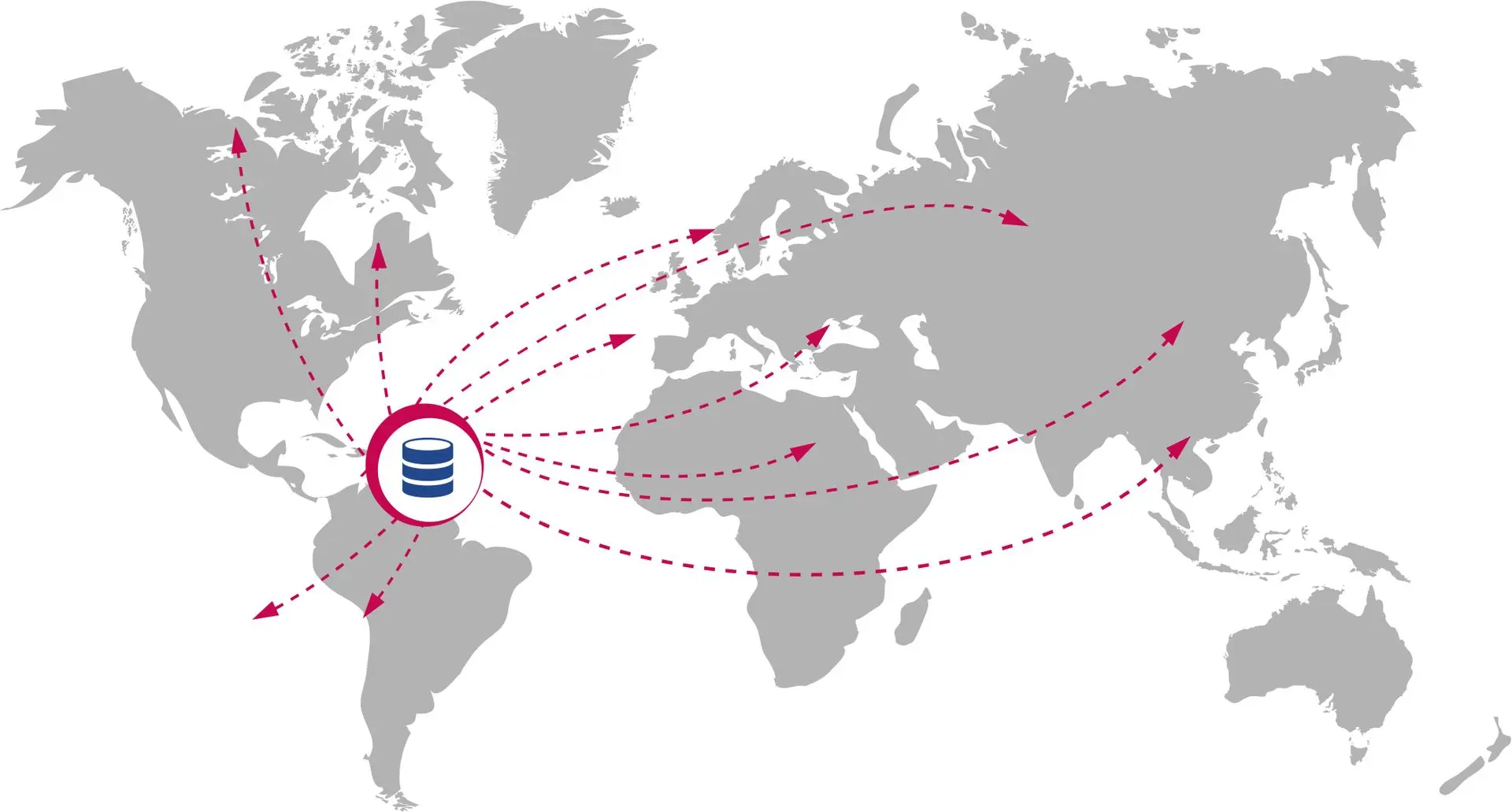
The phrase “data is the new oil” is often dismissed as an overused cliché. However, its central message remains valid. Data has become a productive economic asset, alongside capital, infrastructure, intellectual property and human talent. There is also an important distinction. Oil is depleted when it is consumed. Data can be used repeatedly, augmented with other datasets and applied to new use cases. Customer information, operational records and market data can support forecasting, fraud detection, product development, customer segmentation and artificial intelligence.The economic benefits can be substantial. The Organisation for Economic Co-operation and Development estimates that access to and reuse of public-sector data can generate benefits equivalent to approximately 0.1 to 1.5 per cent of gross domestic product. When private-sector data are included, the estimated benefits increase to between 1 and 2.5 per cent of GDP, with some studies identifying potential gains as high as 4 per cent (OECD, 2019).For Trinidad and Tobago, even a modest improvement in the use of data could support productivity, innovation and the development of new exportable services. This opportunity becomes even more significant when data-driven products are sold globally. Unlike many physical exports, software, analytics and digitally delivered services can be distributed internationally without the transportation costs, inventory requirements and geographical limitations associated with traditional goods.
Artificial intelligence begins with data governance
Many local and regional business leaders are eager to discuss artificial intelligence (AI). Far fewer are enthusiastic about data governance. This is a serious strategic weakness in the Caribbean region. AI depends on reliable, accessible and properly managed data. If an organization’s information is incomplete, duplicated, outdated or poorly classified, AI will not be useful; I have observed instances in which poor data hygiene caused AI systems to generate inaccurate conclusions at greater speed. Poor data can lead to unreliable forecasts, biased decisions, privacy breaches, regulatory exposure and even reputational damage.Data governance establishes who owns information, who may access it, how it is classified, where it is stored, how its quality is maintained and how long it should be retained. It also defines the conditions under which data may be shared, transferred or destroyed. Every company seeking to become data-driven should therefore establish a data inventory, identify accountable data owners, classify information according to sensitivity and define appropriate access, retention and disposal rules. Data governance should not be viewed as an effort to restrict information. Its purpose is to enable responsible use while protecting personal data, intellectual property and commercially sensitive information. I can’t help but reemphasize, trustworthy data sharing requires a combination of legal, technical and organizational safeguards that balance innovation with privacy, security and legitimate commercial interests (OECD, 2025).
International standards are gateways to opportunity
For local businesses seeking access to global markets, good ideas or innovation products are not sufficient. Governments, financial institutions, insurers, healthcare providers and multinational corporations assess suppliers across a range of areas, including information security, privacy, software quality, operational resilience, accessibility and corporate governance. International standards must therefore be viewed as commercial enablers rather than administrative burdens. Standards such as the International Standards Organization ISO/IEC 27001 are one of the most important foundations for companies handling sensitive information. It provides the requirements for an information security management system and helps organizations manage risks relating to the confidentiality, integrity and availability of data (ISO, 2022).Another key standard is ISO 9001, which provides a recognized framework for consistent quality management, customer satisfaction, corrective action and continuous improvement. For software developers and professional-services exporters, it demonstrates that quality is built into repeatable business processes rather than being dependent on individual employees (ISO, 2015). Software companies should also establish a secure product-development lifecycle based on internationally recognized frameworks. Depending on the sector, additional requirements may include privacy-management standards, cloud-security controls, payment-card compliance, business-continuity certification, accessibility standards and AI-governance frameworks. While these certifications do not guarantee commercial success. they can, however, reduce one of the major barriers faced by companies from small economies: the international customer’s uncertainty about whether the local supplier can be trusted and is a reliable source for quality products and services.
Building a national data economy
Businesses cannot drive this transformation alone. Trinidad and Tobago requires a coordinated approach involving the public sector, private enterprise, universities, financial institutions and telecommunications providers. The Government of the Republic of Trinidad and Tobago should strengthen data protection, privacy and intellectual property legislation and enforcement to build international trust in local businesses, while expanding secure open-data programmes, modernizing public records and improving interoperability across state agencies so that properly anonymized public data can support research, entrepreneurship and the development of new digital services.Universities and training institutions must strengthen their programmes in software engineering, data security, data analytics, statistics, AI governance and intellectual property commercialization. Export-development agencies should also assist local companies with the cost and complexity of international certification. For many SMEs, the cost of implementation, documentation and external audits remains a significant obstacle.
From an energy economy to an intelligence economy
Diversification does not require abandoning the energy sector. Trinidad and Tobago’s industrial expertise, engineering capability and infrastructure can support emerging opportunities in energy technology, emissions analytics, industrial automation, renewable-energy services and advanced manufacturing. The objective should be to convert decades of energy wealth into sustainable intellectual, technological and institutional capacity. Trinidad and Tobago will not diversify simply by identifying another list of priority sectors. Success will depend on whether local organizations can develop trusted products and services that international customers are prepared to purchase.In an AI-driven economy, innovation begins with reliable information. Trust begins with governance, security and quality. Global competitiveness begins when businesses recognize that data is not merely an output of operations. It is a strategic asset, an input into innovation and a gateway to international markets. For Trinidad and Tobago, the next chapter of economic diversification must begin with one central understanding: It’s all about the data.ABOUT THE AUTHOR Ian John is a technology futurist and digital transformation leader, and Founder/CEO of CyberEYE, focused on cybersecurity resilience and protecting digital assets across global markets. He previously served as Regional CEO of Massy Technologies InfoCom, where he led enterprise technology and digital transformation initiatives in the Caribbean. He contributes to regional development through work with the CARICOM Digital Skills Taskforce and serves on several boards in governance, insurance, and media. He is also a speaker and advocate for AI, Industry 4.0, and responsible technology adoption, with a focus on digital skills and future workforce readiness.
 Artificial intelligence begins with data governance
 From an energy economy to an intelligence economy