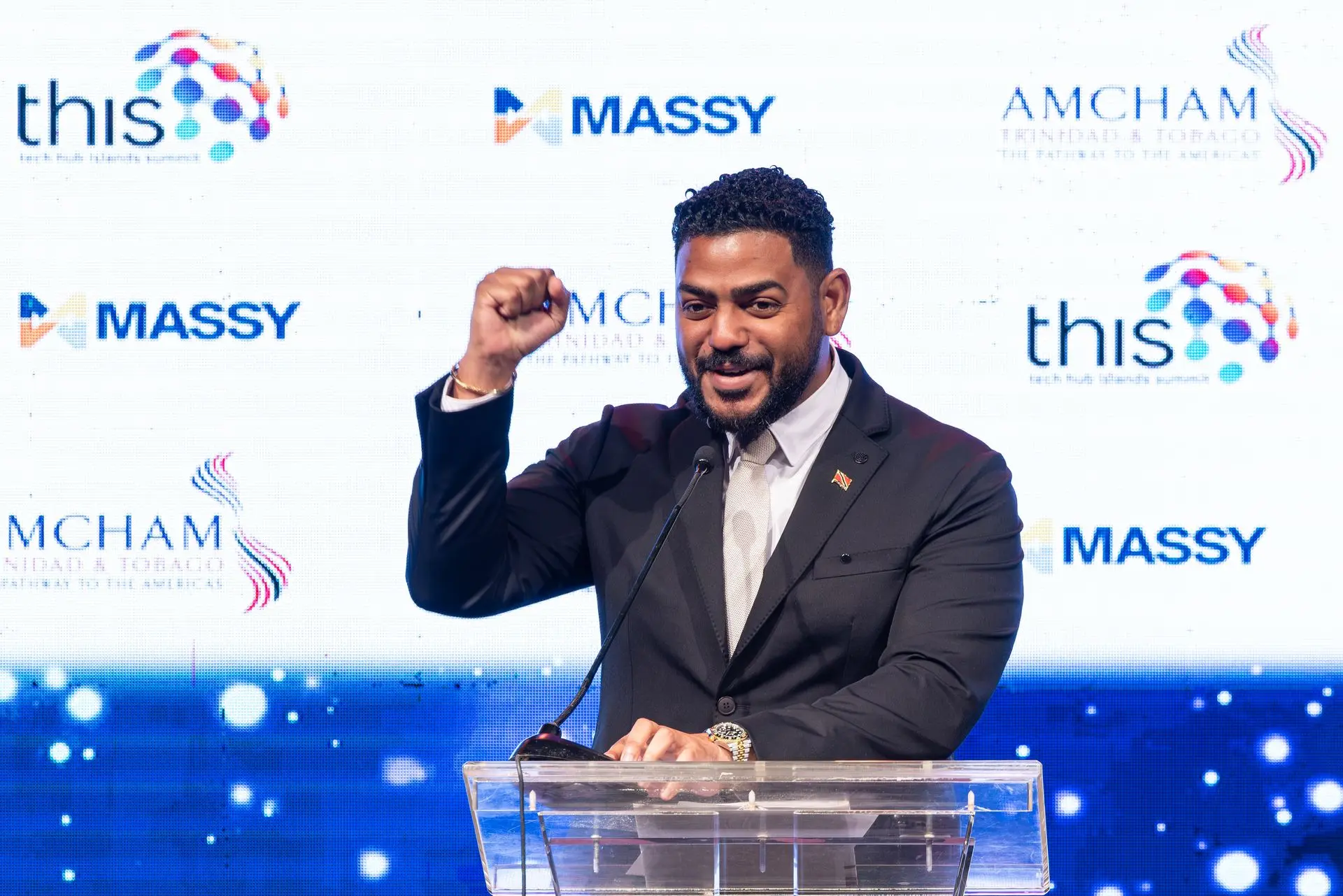
LINKAGE Q2 (2026) - IMPACTDelivering the government's feature address at T.H.I.S., Senator the Honourable Dominic Smith, Minister of Public Administration and Artificial Intelligence, challenged participants to shift their thinking beyond technology itself."The question is no longer whether we should embrace technology, but whether we are using technology to create meaningful change."He noted that while emerging technologies continue to reshape economies around the world, their success should ultimately be measured by the value they create for citizens."Technology has value only when it delivers meaningful outcomes for people."The Minister outlined government's vision for building a modern, citizen-centred digital nation, explaining that digital transformation extends far beyond introducing new technology."Digitising government is an important milestone, but transforming the way government serves people remains our ultimate objective."Central to that vision is VerifyTT, one of the country's foundational digital public infrastructure initiatives, which will enable citizens to securely access, store and share verified government-issued credentials while creating a more seamless public service experience. Digital public infrastructure represents the next generation of national infrastructure, supporting everything from secure digital identity to trusted data exchange and more integrated government services. Government's commitment to developing the country's digital workforce is evidenced through initiatives such as FutureReadyTT, launched in partnership with the Ministry of Education.Recognising that AI is rapidly reshaping the future of work, he stressed that investment in people must remain at the centre of national digital transformation. "The countries that emerge as leaders in the AI economy will be those that invest deliberately in digital literacy, critical thinking and human capital."The Minister also emphasised that digital transformation cannot be achieved by government acting alone. "No government, regardless of its resources or ambition, can build a digital nation in isolation."Instead, he described forums such as T.H.I.S. as vital platforms for collaboration between government, business, universities, entrepreneurs and civil society. "They provide far more than opportunities for discussion; they create the environment in which partnerships are formed, ideas are challenged, innovation is accelerated and practical solutions emerge."While encouraging innovation, Senator Smith also underscored the importance of responsible governance as artificial intelligence becomes increasingly integrated into society. "Innovation and governance are not competing priorities; they are complementary responsibilities."
TITLE SPONSOR REMARKS
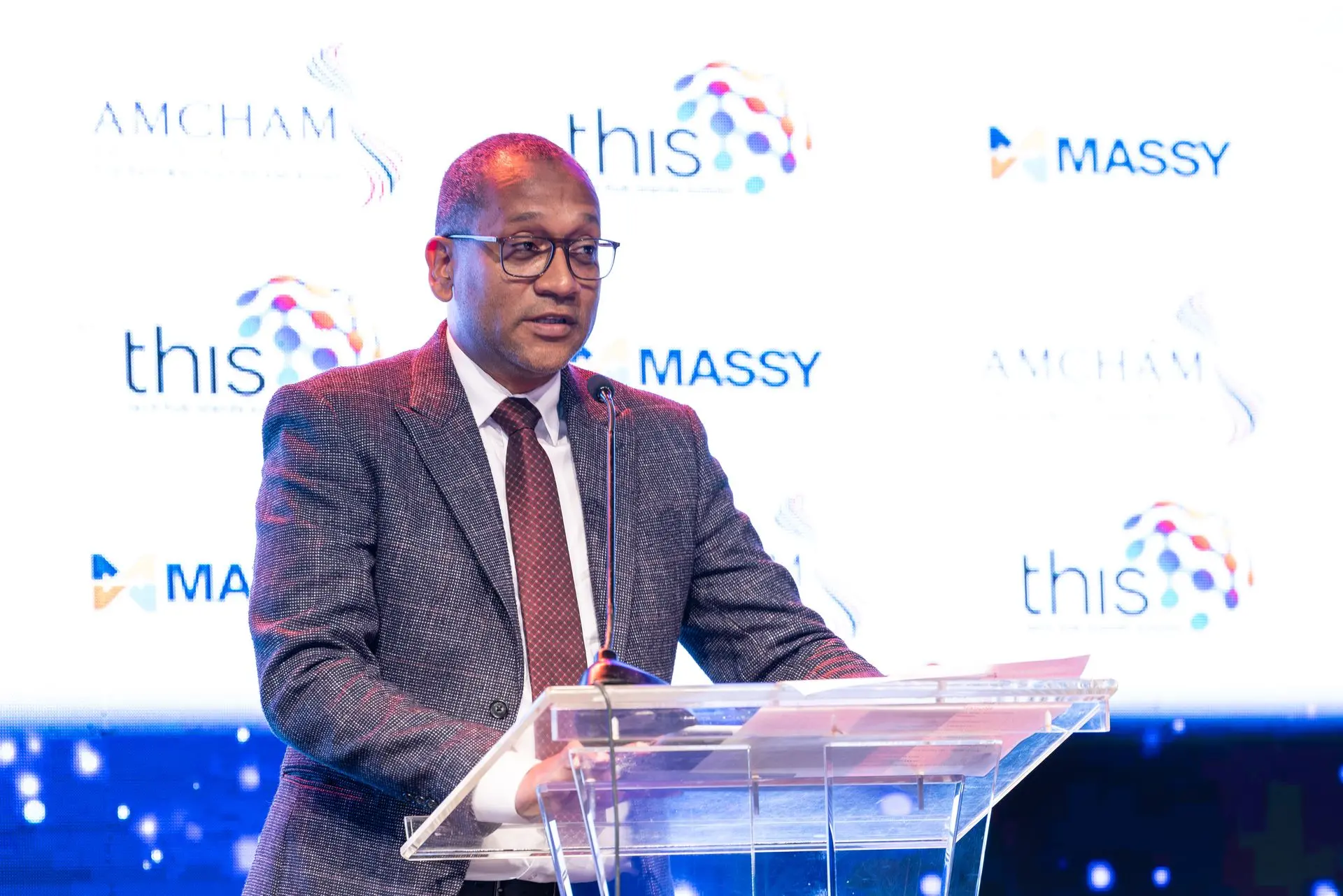
Ryan Chaitram, Sr VP, Strategy and Digital at Massy Representing THIS 2026 Title Sponsor Massy, Ryan Chaitram, Sr VP, Strategy and Digital at Massy reinforced the role of the private sector in helping Trinidad and Tobago build the capabilities required to compete in an increasingly technology-driven global economy."Technology is no longer a side conversation or a specialist agenda. It is central to competitiveness, productivity, innovation, customer experience, and the way people work."Chaitram explained that Massy's support for the Summit reflects its belief that businesses have an important responsibility to help develop the region's digital capability."Massy is proud to be title sponsor of this conference because we believe this is one of the defining conversations for Trinidad and Tobago and the wider Caribbean."He acknowledged the growing influence of artificial intelligence but argued that technology alone is not enough. Organisations must invest in people, develop digital fluency and create environments where employees feel confident adopting new tools."Access is not adoption. Adoption is not fluency. Fluency is not confidence. And confidence is not mastery."He encouraged business leaders to focus not simply on introducing technology, but on helping employees move from awareness to genuine capability."Our responsibility as leaders is to help people move through that journey — from awareness, to access, all the way through to mastery."Chaitram also challenged organisations to think beyond their own workforce and consider how they contribute to developing technology skills across the wider society."Corporate responsibility in this moment has two circles.""First, we must build capability inside our companies.""Second, we must extend capability into our communities."For Massy, he explained, this means investing not only in enterprise technologies but also in education, exposure and pathways that help prepare future generations for careers in an AI-enabled economy.Concluding his remarks, Chaitram delivered a message that captured the broader purpose of the Summit."Technology alone will not carry the Caribbean forward.""People will.""And our responsibility is to help them do so."As discussions continued throughout the two-day Summit, the opening ceremony established a shared understanding between government and the private sector: technology is no longer simply about digital tools or emerging platforms. Its true impact will be determined by how effectively organisations collaborate, invest in people, strengthen institutions and create opportunities that improve lives.The conversations at T.H.I.S. 2026 demonstrated that meaningful digital transformation is not the responsibility of any one sector. It is a shared national effort—one that will require leadership, partnership and a collective commitment to turning innovation into measurable impact.
 Chaitram also challenged organisations to think beyond their own workforce and consider how they contribute to developing technology skills across the wider society.