IMPACT FOR THE FUTURE: AMCHAM T&T CEO Challenges Trinidad and Tobago to Think Bigger at T.H.I.S. 2026
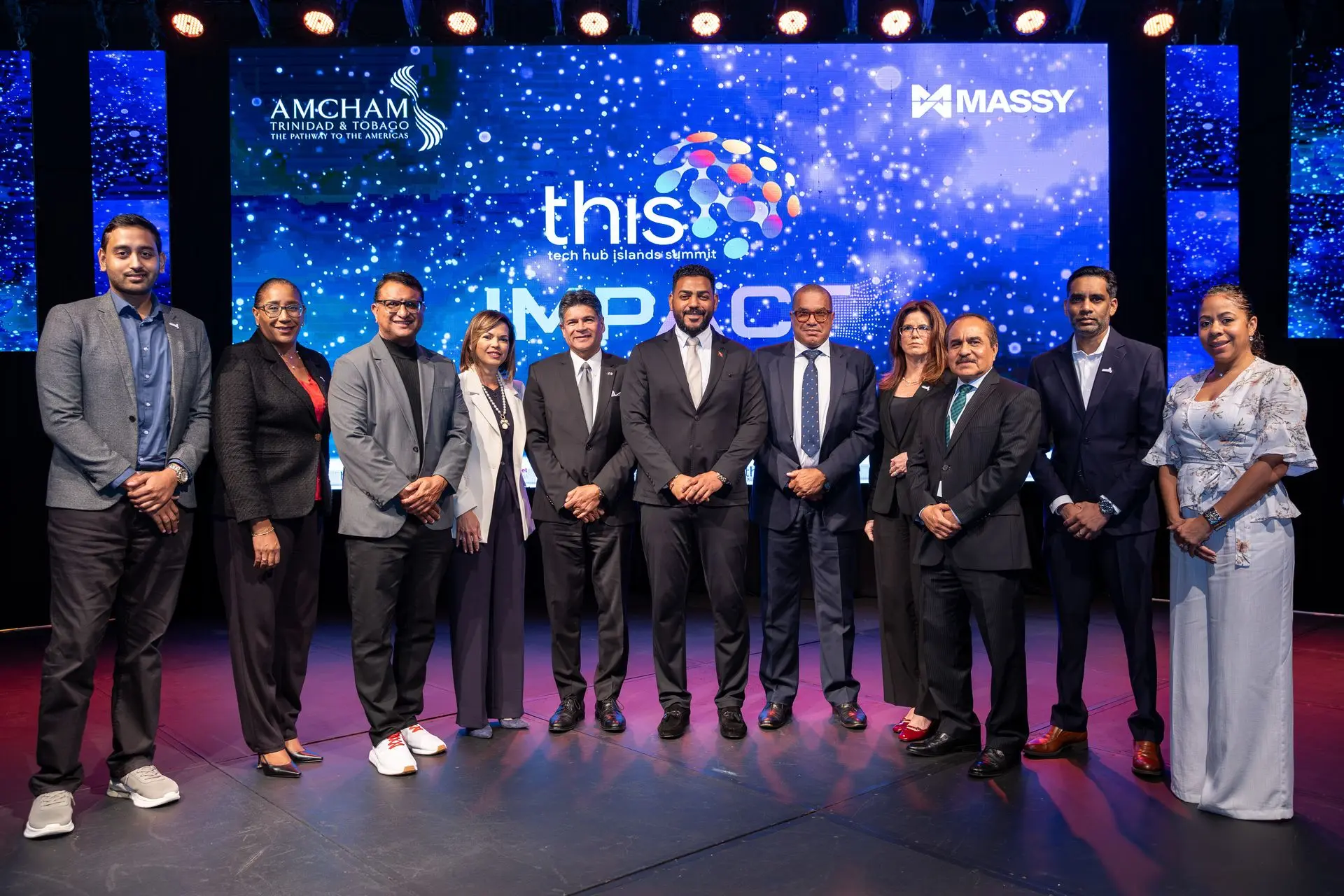
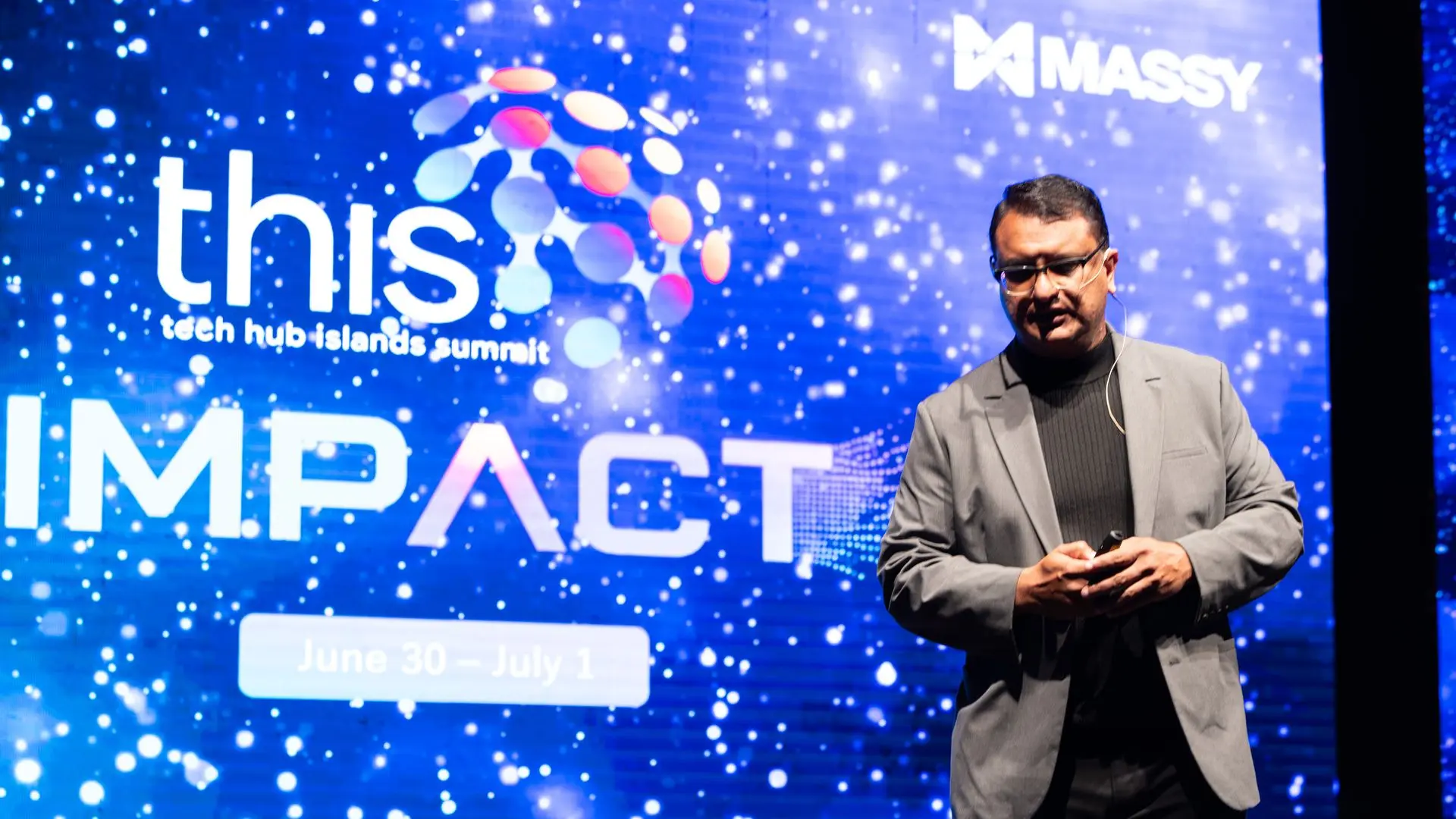
LINKAGE Q2 (2026) - IMPACTAMCHAM T&T'sTech Hub Islands Summit (T.H.I.S.) 2026 challenged leaders to move beyond conversations about technology and focus on creating measurable outcomes for business, government and society.Under the theme “IMPACT" T.H.I.S. 2026 explored how organisations can move beyond experimentation and begin using technology to deliver meaningful value, improve productivity, strengthen competitiveness and position Trinidad and Tobago as a leader within the region's evolving digital economy.At the Opening Ceremony, Nirad Tewarie, CEO of AMCHAM T&T, described the event as one with the potential to be "truly transformative.""Technology has a way of sometimes feeling disconnected from our everyday lives. We don't always connect with it beyond the devices we use. But today, we're here to explore how technology is transforming business, government and society."Reflecting on the Summit's original vision, Tewarie noted that the three objectives established when T.H.I.S. was first launched eight years ago remain just as relevant today: • accelerating digital transformation within the private sector• collaborating with government on public sector digitalisation, and • creating stronger connections between technology founders and established businesses to develop Trinidad and Tobago's innovation ecosystem."At AMCHAM T&T, we genuinely believe we can build a viable tech sector in this country."Tewarie argued that technology should no longer be viewed as a specialised function confined to information technology departments, but as a core capability embedded across every organisation."Technology is no longer separate. It's no longer just a department. It's no longer 'those people' who come when your computer freezes or your Windows crashes.""We have to see our businesses, our institutions and even the public sector as technology-enabled organisations. That is what will allow us not just to survive, but to thrive. And because of that, we have to be ambitious."One of the most ambitious proposals presented during the opening address was a call to significantly expand the technology sector's contribution to the national economy."Minister, I want to respectfully suggest that we set a national goal of ensuring that at least 7% of Trinidad and Tobago's GDP comes from the technology sector."Tewarie explained that increasing technology's contribution would generate benefits far beyond the sector itself. "The implementation and deployment of technology across every sector of society would generate productivity gains throughout the economy. It would improve not only our traditional oil, gas and petrochemical industries ,but also the non-energy sectors, because they would become more efficient, more competitive and more outward-looking through technology."He further argued that technology presented one of Trinidad and Tobago's strongest opportunities for economic diversification and foreign exchange generation."When we look at sectors for diversification, I'm a strong supporter of the creative industries. I'm also a strong supporter of agriculture and tourism... But if we ask ourselves where we already have the human resource capacity to move quickly—where we can achieve medium-term growth—we believe technology is one of those sectors."Looking beyond Trinidad and Tobago's borders, Tewarie challenged stakeholders to think regionally, proposing a Southern Caribbean technology ecosystem that leverages the complementary strengths of Trinidad and Tobago, Guyana, Suriname and Venezuela."Why not build a Southern Caribbean technology cluster?"He suggested that future energy developments could position Trinidad and Tobago to attract energy-intensive digital industries, including data centres, while strengthening its role as both an energy and technology hub.However, Tewarie emphasised that infrastructure and policy alone would not be enough."But for all of this to happen, we must build trust."He pointed to initiatives such as digital nomad visas, Global Entry, public-private collaboration and data governance as critical components of creating an attractive investment environment.As artificial intelligence continues to reshape industries globally, Tewarie also stressed that organisations must rethink workforce development and organisational design."One of the biggest questions surrounding technology is people.""We have to find the balance between upskilling our people and redesigning organisations for a technology-enabled future."Concluding his remarks, he reminded participants that meaningful transformation depends on collaboration across sectors."We've all heard the proverb: 'If you want to walk fast, walk alone. If you want to walk. I think we can do both. We can walk fast—and far—together."Pictured (L-R):• Kiran Deosingh – Director | AMCHAM T&T & Vice President of Technology | Ramps Logistics • Griselle Smith – Director | AMCHAM T&T & Caribbean HR Leader | IBM • Nirad Tewarie – CEO | AMCHAM T&T • Giselle Thompson – Vice President | AMCHAM T&T & Deputy Managing Director | Proman • His Excellency Diomedes Heraclio Carles Cleghorn – Ambassador Extraordinary and Plenipotentiary of the Republic of Panama • His Excellency William Sidney Bush Howard – Ambassador Extraordinary and Plenipotentiary of the Republic of Colombia • Anna Henderson – President | AMCHAM T&T & Chief Executive Officer | Amaranth Business Solutions Ltd. • His Excellency Víctor Hugo Morales Meléndez – Ambassador of the United Mexican States • Anderson Basdeo – Director | AMCHAM T&T & Markets Head - Trinidad and Bahamas, and Country Treasurer - Trinidad | Citi • Nadia McCarthy – Director | AMCHAM T&T & Senior Vice President - Group People & Culture | Massy

 However, Tewarie emphasised that infrastructure and policy alone would not be enough.