From Hype to Impact: Why AI Adoption Must Start With People By Ambikah Mongroo
LINKAGE Q2 (2026) - IMPACT
The Central Question
The central question about Artificial Intelligence is no longer whether the technology is powerful. It is whether we can put it to work in ways that improve how our people make decisions, solve problems and serve customers.
That distinction matters. Too much of the conversation around AI still treats it as something a business buys and rolls out. But technology does not transform an organisation on its own. People do. AI only creates value when the people closest to the work apply it to real business problems.Retail makes this especially clear. It is built on thousands of daily decisions, and AI has to help employees do their work better. One of the most important lessons emerging from Massy’s integrated retail portfolio was that the strongest AI opportunities have not come from asking, “What can this technology do?” But “Where are our people experiencing friction, and how can technology help remove it?” This starting point places people at the centre of technology adoption. The colleagues who understand the work are often best positioned to identify where AI can create practical value. They know which processes are repetitive, which decisions are slowed by incomplete information, where customers experience frustration, and where better tools could unlock productivity.For us, the filter is practical. AI must solve a real business problem. Its impact must be measurable. It must be able to scale responsibly. Most importantly, it must strengthen our people rather than simply showcase technology.
Make Better Decisions
Inventory management provides a useful example. Across our retail network, where we manage well over 30,000 SKUs, ordering is not a simple administrative function. It is a complex decision-making process, and errors show up quickly as out-of-stocks, excess inventory, waste, tied-up working capital and disappointed customers.AI-supported automated ordering is helping our teams analyse inventory faster, identify replenishment needs more accurately, and automate parts of the ordering process that would otherwise require significant manual effort. But the real story is not that a machine is now doing the work. The more important lesson is that our people are being given better information and more capacity to focus on judgement, exceptions and service.The same principle applies to prepared meals under our Epicure brand. Fresh and ready-to-eat categories require a careful balance between availability and waste. Produce too little and customers are disappointed. Produce too much and waste increases. AI is helping us analyse sales trends, seasonality, customer preferences and location-specific patterns so our teams can make better decisions about what to produce, how much to produce and where to send it.The point is not to replace category expertise. It is to equip our people with stronger insight so their expertise can be applied with greater precision.Serving customers is another area where this matters. Many businesses collect customer data, but data alone does not create stronger relationships. What matters is whether our teams can interpret the signals and respond in ways that are relevant, timely and respectful.By analysing purchasing behaviour, AI can help us identify when a customer may be reducing spend or becoming less engaged. That insight gives our teams an opportunity to move from reactive marketing to proactive retention. It can support targeted engagement, feedback gathering and a more thoughtful understanding of the customer relationship.Similarly, we conduct a monthly evaluation of customer service levels across the business. AI is helping us integrate and analyse this information so our teams can identify trends, spot recurring issues and anticipate potential service challenges earlier. The value is not simply better reporting. It is better learning. When insight reaches the people who can act on it, service improvement becomes more continuous and less episodic.
Responsibility Comes With Better Tools
Once we understand how AI can support our people in making decisions, solving problems and serving customers, the next question is how we use it responsibly across the wider business. The issue is not only what AI allows us to do, but how thoughtfully we choose to use it.Hyper-personalisation is a good example. The ability to analyse customer purchases, build digital personas and design more relevant offers can make engagement more meaningful. Over time, stronger customer relationship management tools can help us move beyond broad promotions toward communication based on actual shopping behaviour and preferences.But personalisation should never be treated as permission to over-communicate or intrude. If AI is people-centred, that includes our customers as well as our employees. Better technology should lead to better experiences, not simply more messages.In supply chain operations, the people-centred principle is just as important. At our newly built Orange Grove Warehouse, AI-enabled automation supports picking, inventory analysis, dispatch and logistics. The deeper value lies in how it helps our teams improve the movement of goods through the business with greater speed, accuracy and consistency.Better fulfilment and stronger supply-chain visibility reduce pressure points across the organisation and create a more reliable experience for customers. Again, the technology matters because of the problem it helps our people solve.Marketing and content creation offer a different kind of lesson. In the most recent Epicure brand campaign, our retail marketing teams used AI from early brand design and creative direction through to the production of assets for in-store, traditional media and social media channels. What made this powerful was not the novelty of the tools. It was what the tools allowed our people to do.Our teams were able to move faster, reduce external production costs, rely less on third-party support and retain greater control over testing and refinement. AI did not replace creativity. It expanded our creative capacity. It gave our people more room to explore, produce, learn and improve. That may be one of the most underestimated benefits of AI. Some returns are immediate and measurable: faster cycle times, lower costs, better forecasting, stronger availability or improved reporting. But the larger return comes when our employees become more confident problem-solvers.When our people understand the tools and are encouraged to experiment responsibly, they begin to identify improvements that leadership may never have seen from the top. That is when AI stops being a project owned by a small group and becomes a broader organisational capability.This is why AI adoption is ultimately a leadership challenge. The technology may be ready, and our people may be willing, but leaders have to create the conditions for learning. That means putting tools in our people’s hands, building literacy, setting clear guardrails and making it safe to test ideas.A careless use of AI is a problem, and hiding what was learned is a problem. But a well-intentioned experiment that does not work should not automatically be treated as failure. In a learning organisation, it is information.This is the thinking behind Massy’s engagement with OpenAI to bring enterprise-level tools and training to our teams across different levels of the organisation and across the territories in which we operate. The objective is not simply to teach people what AI is. It is to help our people understand what AI can do in the context of their own roles.The lesson for business leaders is straightforward. AI should be business-led, people-enabled and governance-backed. It must solve real problems, create measurable value and scale responsibly. But above all, it must strengthen the people who use it.At Massy, we see many practical ways that AI can improve how our people make decisions, solve problems and serve customers. But the starting point is not the technology itself. It is our people, the customers we serve, and the challenges we are trying to solve.In retail, transformation does not happen because a new technology arrives. It happens when people use that technology to make the business more responsive, more disciplined and more human.ABOUT THE AUTHOR
Ambikah Mongroo is the Group Executive VP and Portfolio CEO, Integrated Retail Portfolio at Massy
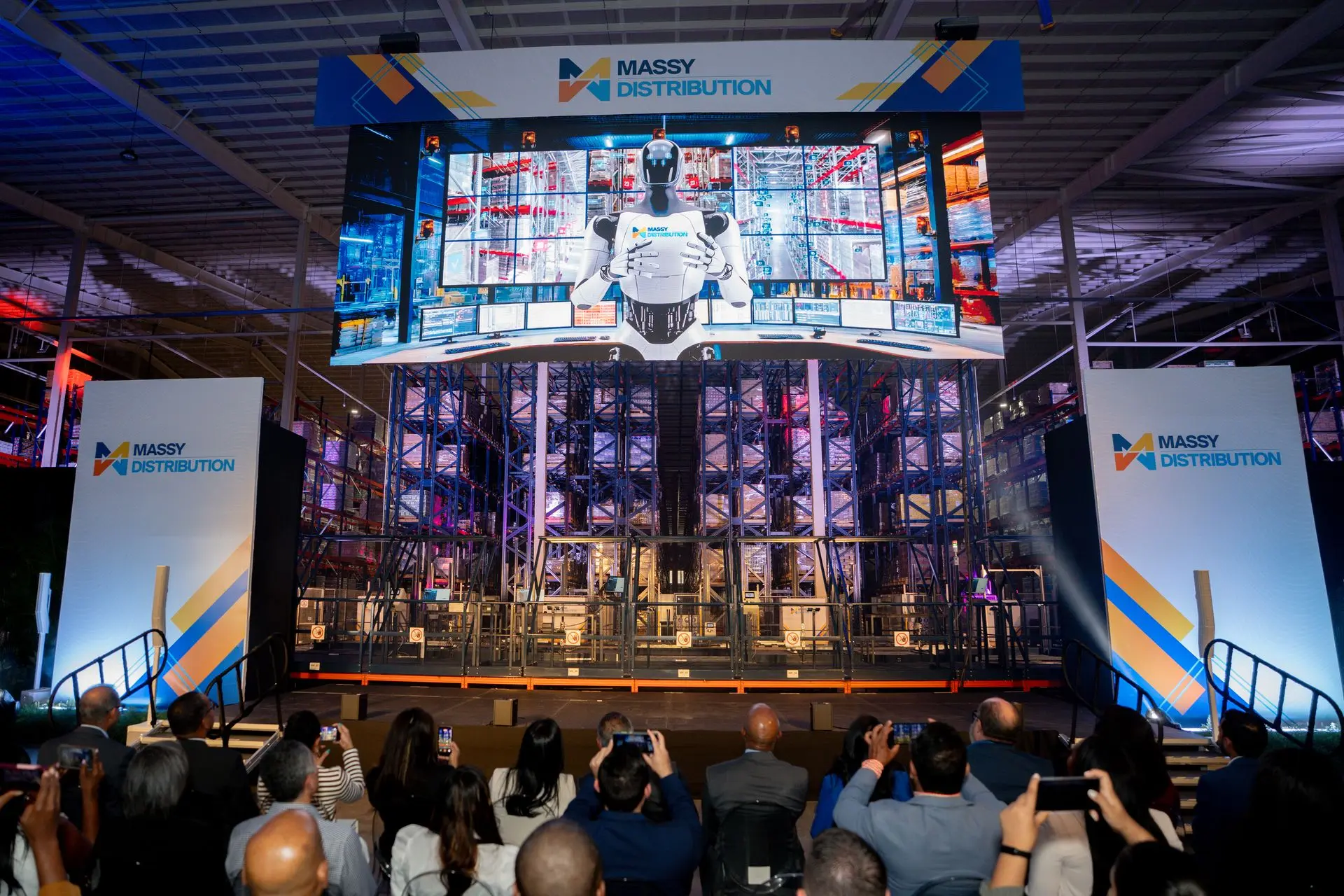
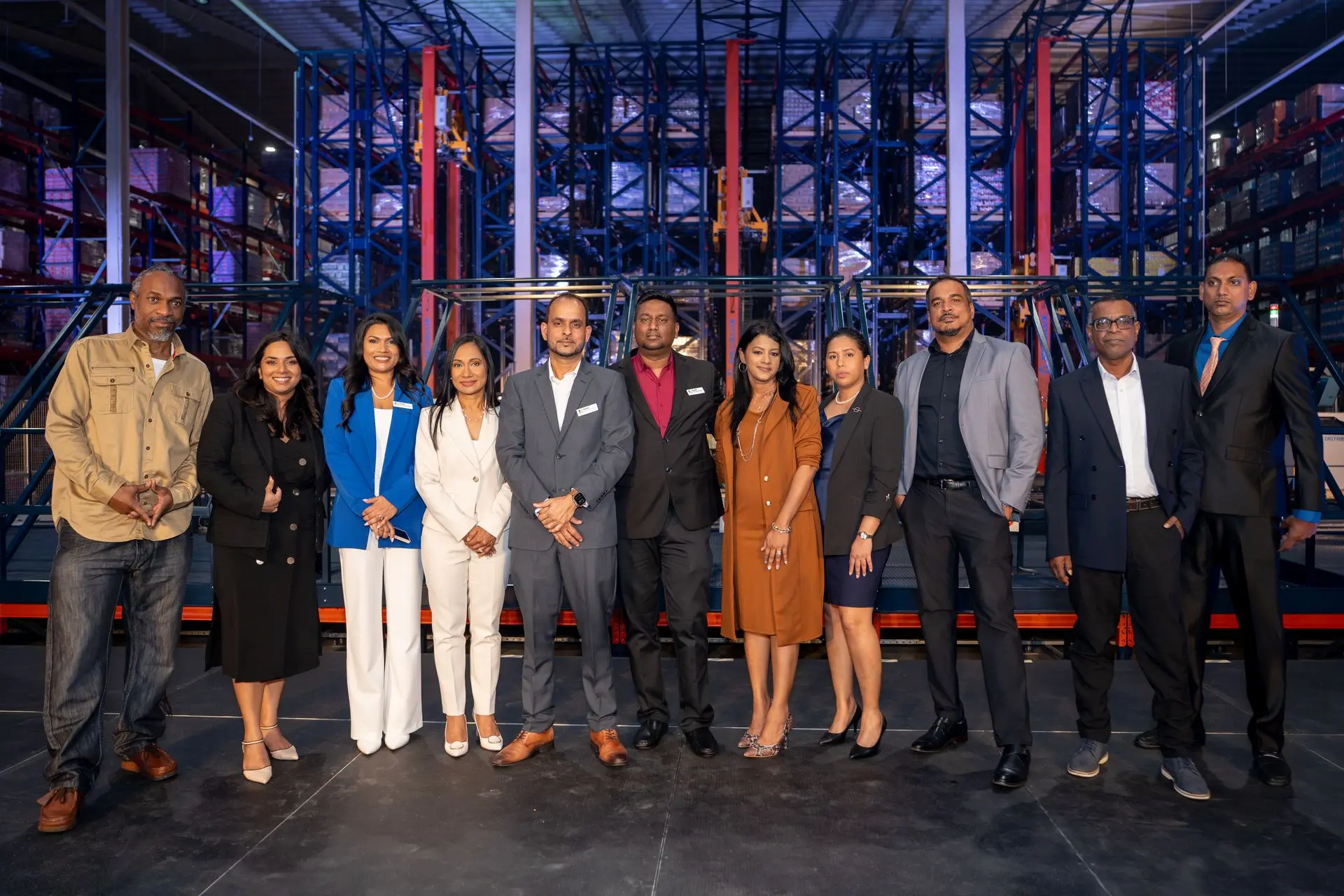

 In supply chain operations, the people-centred principle is just as important. At our newly built Orange Grove Warehouse, AI-enabled automation supports picking, inventory analysis, dispatch and logistics. The deeper value lies in how it helps our teams improve the movement of goods through the business with greater speed, accuracy and consistency.