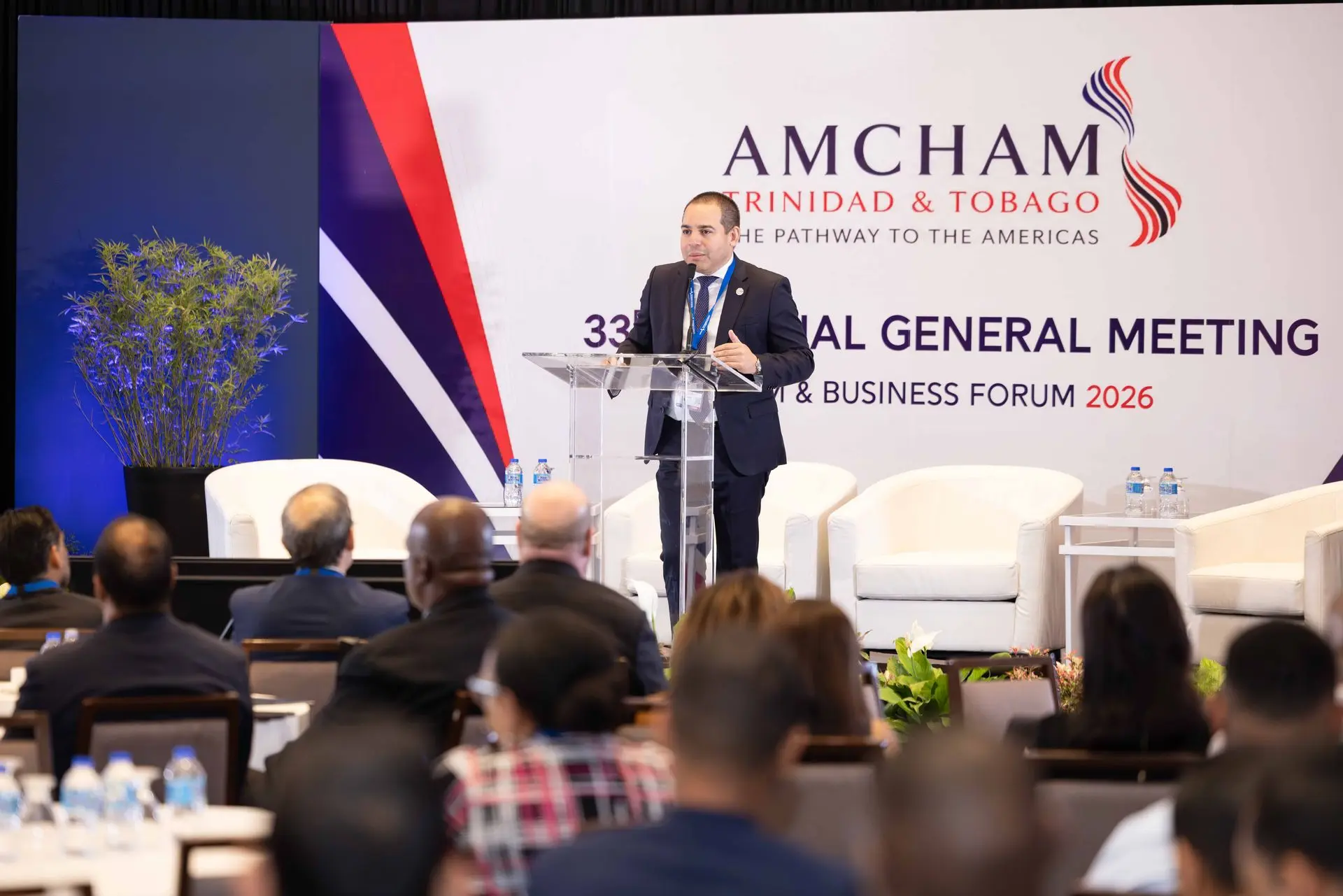
Amaru Liendo At AMCHAM T&T's AGM: AMCHAM T&T's Welcomes VenAmCham President to Discuss Venezuela's Business Outlook & Regional Opportunity
LINKAGE Q2 (2026) - IMPACTAMCHAM T&T was pleased to welcome Amaru Liendo, Vice President of the Association of American Chambers of Commerce in Latin America and the Caribbean (AACCLA) and President of the Venezuelan-American Chamber of Commerce (VenAmCham), as the keynote speaker at its AGM & Business Forum.VENEZUELA: CURRENT SITUATION AND BUSINESS OUTLOOKDelivering a presentation entitled “Venezuela: Current Situation and Business Outlook,” Liendo encouraged the business community to view Venezuela through the lens of long-term regional opportunity, outlining how reforms, investment and renewed economic activity could strengthen commercial ties between Venezuela and Trinidad and Tobago. (The presentation was delivered prior to the devastating earthquakes that later affected parts of Venezuela.)A central theme of his presentation was the strategic relationship between the two neighbouring countries, particularly in energy.“The Dragon field could boost the economic relationship between the two countries, revitalise that relationship and for sure be a source of LNG supply,” he said.Liendo argued that the opportunity extends well beyond a single project, pointing to Venezuela’s significant untapped gas resources and the potential for greater regional energy integration.“We are burning gas every single day that could power the whole T&T territory. If we recover that gas, we could cover all the necessities of T&T.”He noted that strengthening commercial collaboration between the two countries could play an important role in supporting regional energy security while creating new opportunities for businesses operating across the southern Caribbean.Beyond energy, Liendo painted a broader picture of an economy undergoing structural change, with opportunities emerging across infrastructure, logistics, healthcare, electricity generation and mining.He pointed to the country’s extensive natural resource base as one of its greatest competitive advantages.“We have the biggest oil reserve in the world, and I would say that we also have a lot of gas that is not yet fully certified. There is a big opportunity to continue to explore.”Liendo explained that Venezuela’s oil sector has already begun recovering, with production increasing steadily over recent months and significant potential for future growth.“This is a huge amount of money. This is a huge amount of opportunity. Without major investment, Venezuela could rise to 1.5 to 1.8 million barrels per day. With additional investment, we can easily reach again around three billion barrels per day of production, because we have done it before.” He also highlighted reforms aimed at improving Venezuela’s investment climate, particularly within the hydrocarbons sector, describing recent legislative changes as an important step toward rebuilding investor confidence.“We passed from being the least competitive country in the world’s borders to being in the middle of the ranking with that law.”Liendo further noted that greater transparency within the energy sector has become a key priority.“Fortunately, we now have a transparent market for our oil, and all the oil is being traded by American ethical, honest and transparent companies that are paying the full market price to my country.”While acknowledging that challenges remain, particularly within public infrastructure, Liendo suggested these very challenges present significant opportunities for private sector participation.He noted that recent policy changes have opened Venezuela’s electricity sector to private investment for the first time.“The government authorised the participation of the private sector in the electricity sector. This is something that never happened in the past. If we are able to change the approach of managing the electricity sector from a private standpoint, we are going to get better results.”He also pointed to opportunities within logistics and healthcare, noting that infrastructure modernisation and expanding access to services will require substantial investment over the coming years.To support companies interested in entering the Venezuelan market, Liendo highlighted the work of VenAmCham’s Centre for Investment, Commerce and Competitiveness, which assists businesses with market intelligence, regulatory guidance and commercial matchmaking.Closing his presentation, he encouraged businesses to look beyond historical challenges and focus on the long-term opportunities that regional collaboration can create.“Venezuela and Trinidad are not only connected by geography, they share an energy future. Now is the time to build it together.”Liendo’s presentation aligned closely with the Forum’s theme, “Now to Next,” challenging business leaders to consider how regional partnerships, investment and private sector collaboration can help shape the next chapter of economic development across the Caribbean.
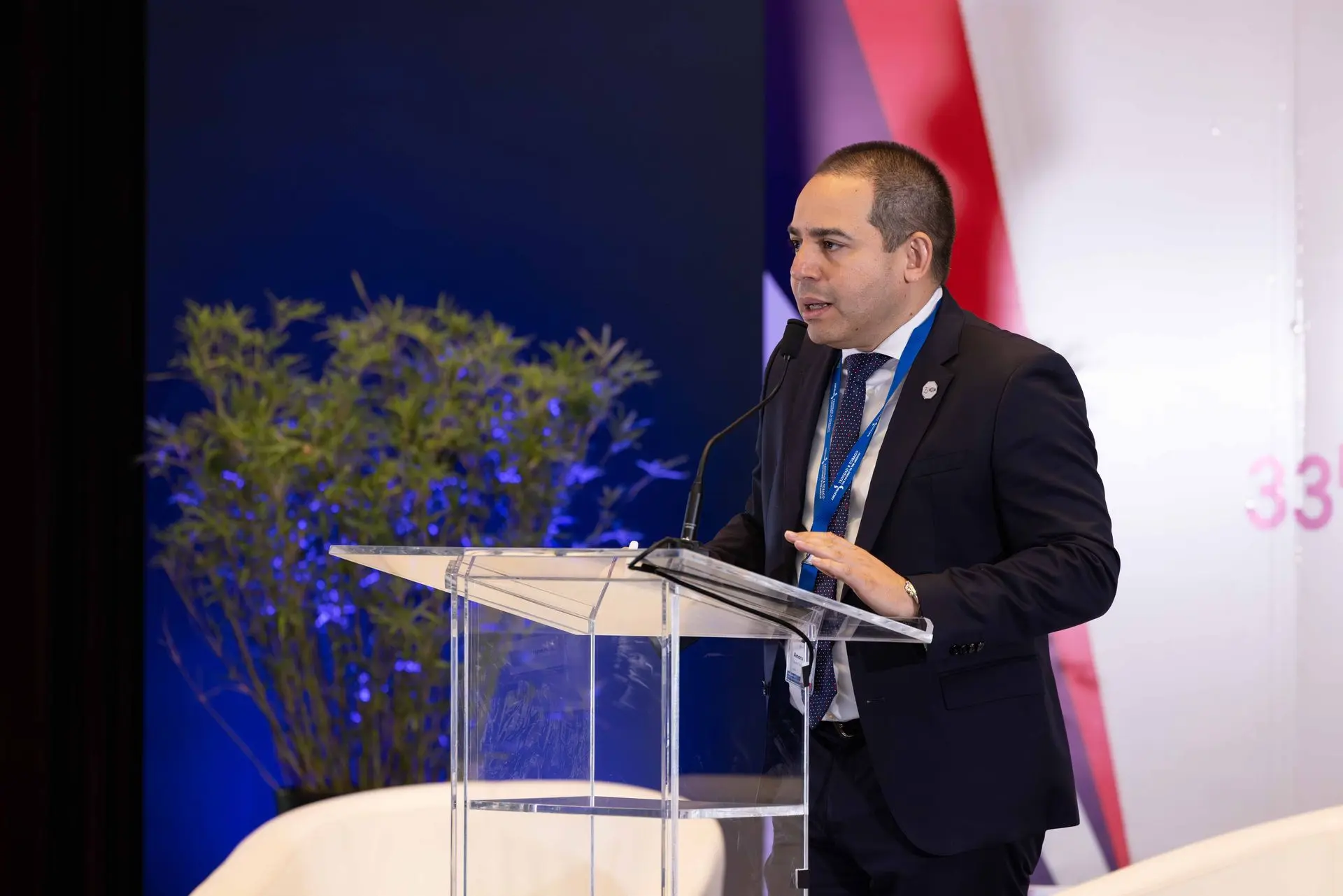
 Delivering a presentation entitled “Venezuela: Current Situation and Business Outlook,” Liendo encouraged the business community to view Venezuela through the lens of long-term regional opportunity, outlining how reforms, investment and renewed economic activity could strengthen commercial ties between Venezuela and Trinidad and Tobago. (The presentation was delivered prior to the devastating earthquakes that later affected parts of Venezuela.)