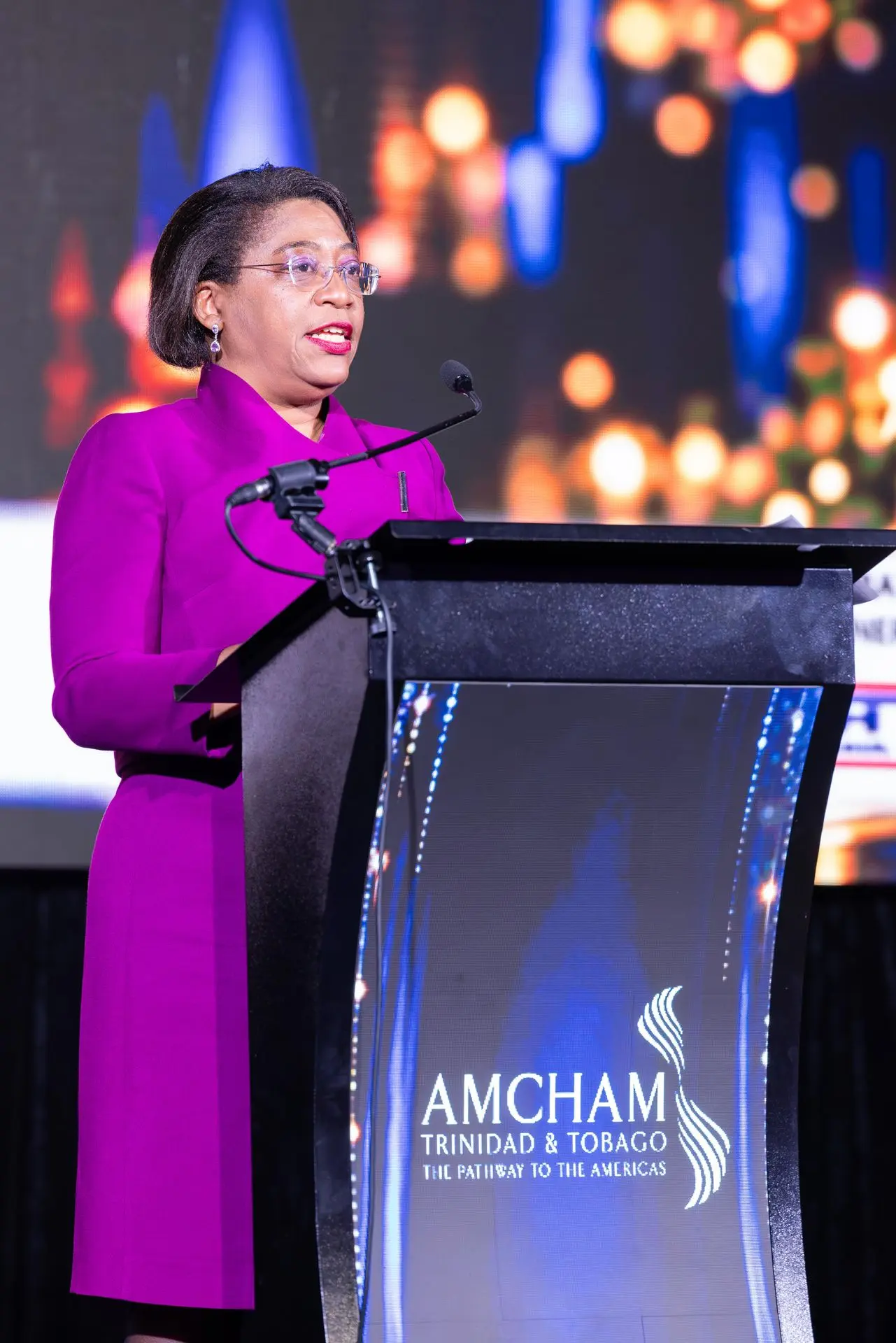
Good Evening!
Tonight, we come together to recognise organisations that have demonstrated leadership, innovation and commitment to Health, Safety and the Environment across Trinidad and Tobago.
To the nominees and recipients of the 16th Annual National Excellence in HSE Awards, congratulations. Your continued excellence in HSE is making the workplace safer and setting the standard to which all organisations should aspire.
On behalf of the Minister of Labour, Small and Micro Enterprise Development, allow me also to recognise the safety professionals, supervisors, worker representatives and frontline teams whose daily efforts stand behind tonight’s achievements.
For the people whose work we honour, success often means that an ordinary day remains an ordinary day. A worker completes a shift. A parent gets home in time to see the children. A family makes its plans for tomorrow, confident that tomorrow will come.
That ordinary day is worth protecting.
On behalf of the Minister I also commend AMCHAM T&T for sustaining these awards and convening its 30th Annual HSSE Conference and Exhibition. You have created an important platform for business to demonstrate leadership in protecting people and the environment.
Ladies and Gentlemen, the Minister of Labour, Small and Micro Enterprise Development’s message tonight is simple: the standard we celebrate here must become the standard workers experience every day.
The commitment to Occupational Safety and Health is significant as we understand that work can only be decent, if it is safe. This is demonstrated in no small part by the inclusion of a safe and healthy working environment in the ILO’s framework of fundamental principles and rights at work, in 2022, and adding Conventions 155 and 187 to its list of Fundamental Conventions.
Workers in all sectors and across the world are exposed to unsafe and unhealthy working environments on a daily basis. In the current dynamic work environment, businesses and workers must now contend with a range of emerging hazards, in addition to traditional hazards. Including climate change; pollution; digital technology; non-standard forms of employment; excessive hours; and the informal economy.
While global rates of workplace harm in the past few years have been mostly stable at 18% of the current workforce, they are highest in low- and lower-middle-income countries at 19% and 22%, respectively.
In Trinidad and Tobago between 2021 and present, while the figures are fluctuating, reported injuries and fatalities have been on a slightly downward trend. This is testament to the work you have put in and the systems you have implemented. However, there is still a lot of work to be done.
Let us take a moment to acknowledge why this work must be done. Those instances where the day was not ordinary. We all recall high profile incidents, such as the Paria diving tragedy in 2022, in which four divers lost their lives and one was left injured and traumatized. The incident in 2023, where Allanlane Ramkissoon suffered severe burns at the NiQuan gas-to-liquids plant.
The unfortunate incident of Kern Etienne who died as a result of a trench collapse during emergency repair work for WASA. The collapse of Well Services Limited's Rig 110 which resulted in the death of Pete Phillip in 2024. And Darryl Figaro, a private contractor, who fell off a ladder while working on a roof in Tobago.
These are just a few examples that are not intended to embarrass but instead to remind us why occupational safety and health matters. To recognise that there can be no acceptable level of incident or accident. One incident is one too many.
Another concept that those in this room must keep in mind is that workers are generally not worried about workplace harm until they experience it.
That means that it is the responsibility of organisations and the Health and Safety Frameworks and Systems to keep people safe, recognizing that, in addition to the devastating impacts on individuals, their families and communities, there is also an impact on enterprises’ efficiency and productivity and the wider economy.
The theme of the HSE Conference, “Intelligent and Resilient by Design”, shows a deep recognition of the need for systemic change.
“By design” means before equipment is purchased, before a project schedule is approved, and before a contractor begins the job. It means examining work processes to identify and eliminate risk from conception as opposed to reaction. Your test comes when potential risk collides with hard deadlines and tight budgets. Your commitment is tested when maintenance competes with production, when a contractor requests more time, and when a worker raises a concern that could delay the job. Those moments reveal the standards an organisation is prepared to uphold.
No production target, no deadline and no profit margin can justify exposing a worker to preventable harm.
Workers must be empowered to report hazards and near misses without fear of retaliation. Trade unions and worker representatives have an important contribution to make in identifying problems and developing practical solutions.
That protection must extend to temporary and contracted workers. The terms of a person’s engagement must never become an excuse for a lower standard of care.
Resilience of organisations depend on the health of the people who sustain an organisation. Not only within the walls of the workplace. The environmental responsibilities of pollution prevention, responsible waste management and emergency preparedness help protect neighbouring communities as well as employees.
Ladies and gentlemen, this agenda must reach businesses of every size.
Larger companies have an opportunity to help. Through your supply chains, you can share expertise, mentor smaller contractors and ensure that the standards you require are supported by realistic arrangements for carrying out the work.
On behalf of the Minister of Labour, Small and Micro Enterprise Development, I want to let you know that you are not in this alone. Under the leadership of our Prime Minister, and working with his Cabinet colleagues, the Minister of Labour, Small and Micro Enterprise Development is committed to advancing an approach to development in which the protection of workers and the growth of enterprise reinforce each other.
For the Minister with responsibility for the Occupational Safety and Health Authority and Agency, the duty to strengthen the institution entrusted with protecting people at work is paramount.
The Minister of Labour, Small and Micro Enterprise Development is committed to pursuing a stronger and more effective occupational safety and health system, one that helps employers meet their obligations, listens to workers and supports fair, effective enforcement.
This fiscal year, OSHA will begin operationalising Section 66 of the Occupational Safety and Health Act, giving practical effect, for the first time, to a legislative mandate that has remained unfulfilled for too long.
For years, the Authority has carried responsibilities for research, training, information, advisory services and regulatory proposals without the dedicated capacity to deliver them comprehensively.
We are taking steps to close that gap.
Operationalising Section 66 will strengthen the Authority’s strategic and proactive role in protecting people at work. It will build the technical expertise and systems to examine patterns in injuries and occupational disease, identify emerging hazards and guide national prevention priorities.
The lessons from one workplace must become protection for workers in many others.
Alongside these Section 66 functions, we will advance the development, consultation and approval of codes of practice under Section 67. These codes will translate legal requirements into practical guidance suited to the work people actually perform.
For a small enterprise without a dedicated safety department, clear guidance and accessible advice can make a real difference. For workers, they mean stronger prevention informed by the risks they face every day.
Modernising the legislative framework is also important. It must address the clarity of duties, the effectiveness of investigation and enforcement, and the supporting regulations needed for practical protection. Fairness and due process must remain central.
The Ministry of Labour, Small and Micro Enterprise Development will continue to advocate for strengthening OSHA, as the public should be able to have confidence in the regulator.
Progress will require engagement with employers, trade unions, workers and professional bodies. Consultation must help resolve practical difficulties and inform measures that can be implemented. Its value must ultimately be felt in the workplace.
Ladies and gentlemen, strengthening our national occupational safety and health system must go hand in hand with making practical support accessible to businesses, particularly our small and micro enterprises.
It is within this context that the Ministry of Labour, Small and Micro Enterprise Development is advancing “Smarter Safety, Stronger Business”, a digital occupational safety and health project through collaboration with the United Nations Development Programme (UNDP) and partners, including AMCHAM T&T.
With OSHA providing technical leadership, the proposed “OSH-in-a-Box” platform will bring guided risk assessments, preventive checklists, incident recording, short learning modules and access to safety advice within reach of micro and small enterprises.
The project is designed to begin with 40 enterprises, combining digital tools with training and coaching. For an owner working with limited time and resources, this means practical support to identify a danger, understand what needs to change and act before someone is hurt.
We are also pursuing a connection between safety performance and access to finance. Through a proposed Safety Score and a feasibility study with banking, insurance and credit-rating partners, the project will examine how demonstrated safety improvements could support preferential lending rates and insurance incentives.
Our objective is to help entrepreneurs build a record of responsible safety management that could strengthen access to affordable financing for better equipment, improved working conditions and business expansion.
When a small business invests in protecting its workers, we want that commitment to help open doors to more affordable finance.
This brings labour protection and enterprise development together in a practical way: helping businesses become safer, more resilient and better positioned to grow.
A small business may have a smaller payroll, but the lives on that payroll have the same value.
Understanding the importance and accessibility of technology to transform occupational safety and health from reaction to pre-action, the Ministry is also working to implement an information management system at the OSH Agency. This will strengthen existing systems, enable digital access to information and databases; digitise reporting; and facilitate the leveraging of this data towards better safety outcomes.
As this administration, under the leadership of the Prime Minister, continues to advance its diversification thrust and implement its Revitalisation blueprint, it will be more important than ever to ensure that the groundwork has been laid for safety and health.
We will not compromise these fundamental rights in order to achieve growth, instead we are working to ensure that they are mutually reinforcing.
In closing, on behalf of the Minister of Labour, Small and Micro Enterprise Development, I issue a challenge to those in this room. Turn one lesson from tonight into a specific action. Correct a risk. Review your hazard reporting mechanism. Help a smaller supplier with compliance. Let us grow together.
To our nominees and award recipients, you have earned this recognition. Carry it with pride, and use your example to lift the standards around you.
The standard we celebrate tonight must become the standard workers experience every day and that day should be, an ordinary day.
Congratulations to all our nominees and award recipients. I thank you.
END