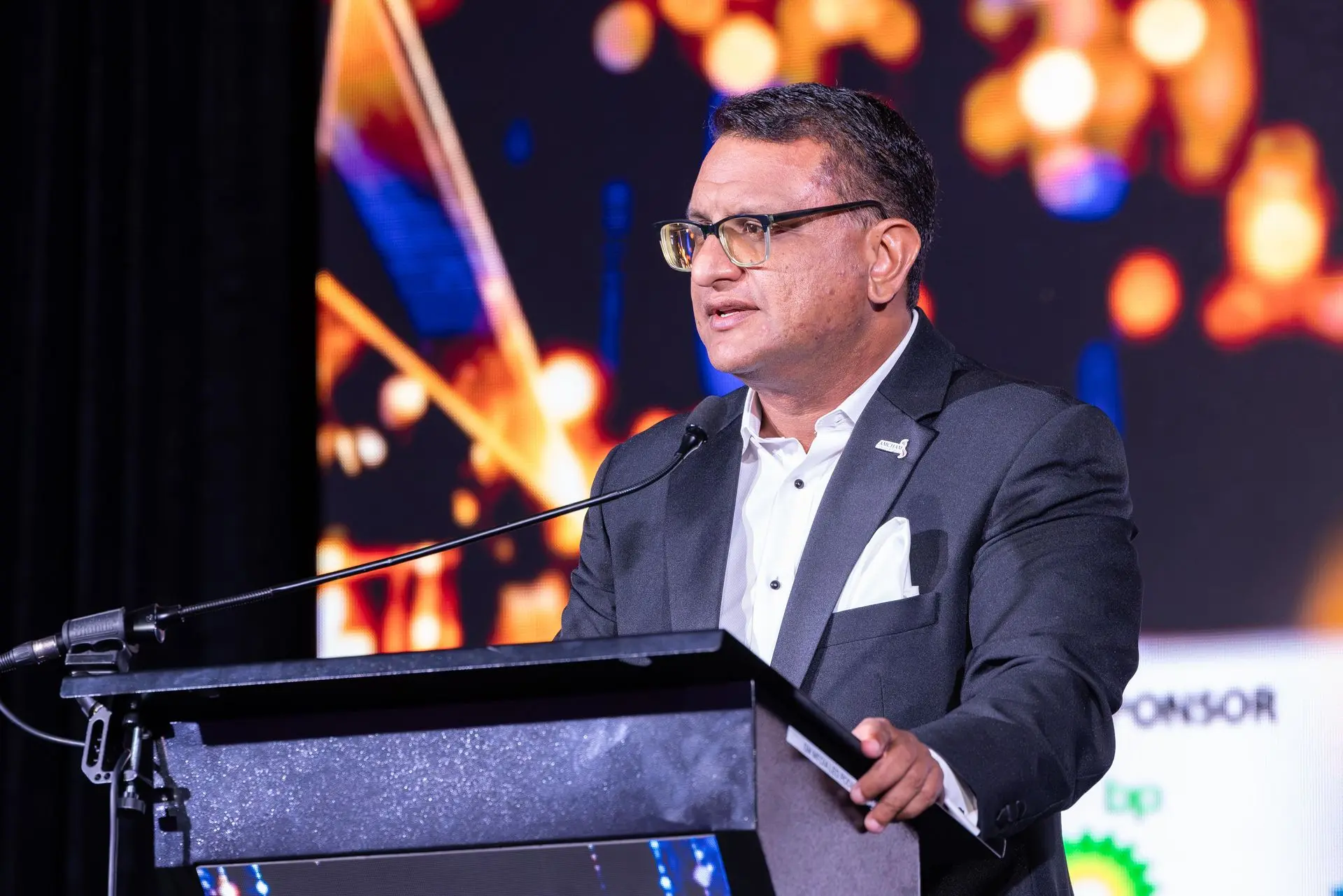
Good evening, everyone.
It is my pleasure to welcome you to the 16th Annual National Excellence in HSE Awards.
Tonight, we celebrate the organisations and individuals who understand that Health, Safety and Environment are not simply compliance requirements. They are fundamental to how we lead, how we operate and how we protect the people who make our organisations possible.
To our sponsors and partners, thank you for your continued support of these Awards. To our judges, thank you for the time, expertise and integrity you have brought to this process. And to all our finalists, congratulations. Reaching this stage is an achievement that deserves recognition.
I also want to acknowledge AMCHAM T&T’s HSE Committee, both past and present, for their invaluable service, commitment and leadership – not only in making these Awards possible, but in championing stronger HSE standards across their organisations and the wider business community.
And finally, I would also like to extend our sincere appreciation to the mentors of AMCHAM T&T’s HSE Mentorship Programme: Gail Figaro, Antonia Lucky, and Lestor Boodoo for your invaluable contribution and for demonstrating the power of mentorship in building a safer, more resilient business community. Through your dedication, you are helping companies strengthen their HSE cultures and advance the standards that protect our people, our workplaces, and our future.
Before we proceed, I want to clarify one important point. The judging process is entirely independent of AMCHAM T&T. We facilitate the Awards, but we do not participate in the judging or influence the outcomes.
Being named as a finalist is an accomplishment in itself. However, the judges must assess every submission against rigorous criteria, and those standards cannot be compromised.
As we are recognising excellence in health and safety, there may be categories in which the required standard has not been met, and no winner is selected. That should not diminish the achievement of those who have been shortlisted. Rather, it speaks to the credibility of the process and the importance of maintaining a standard that all of us in the business community can respect.
HSSE has always been challenging to measure because its greatest successes are often the incidents that never happen. Too often, we take a reactive approach, measuring the cost and impact of accidents after they occur. But what about the value of being proactive? Effective prevention can save organisations millions in potential losses, operational downtime and reputational damage.
How do we measure the value of what we prevent, rather than only the impact of what goes wrong?
I am encouraged to see so many of you here today, particularly at a time when businesses are facing economic pressures and difficult decisions about where to allocate resources. Your presence reflects an understanding that investing in prevention today can save far greater costs tomorrow.
However, we must also ask ourselves a more fundamental question: How committed are we, as leaders and organisations, to HSSE and to building a genuine culture of safety? Is safety truly embedded in our decisions, our budgets and our everyday behaviours, or does it become a priority only after something goes wrong?
A strong safety culture is not measured simply by the absence of accidents. It is reflected in the risks we identify before they escalate, the concerns we encourage employees to raise, the lessons we learn and the investments we make to protect our people. Ultimately, our commitment to HSSE is demonstrated not just by what we do after an incident, but by what we do every day to prevent one.
The HSSE Conference is the AMCHAM T&T's longest Conference - it turns 30, and the HSE committee is our oldest and largest committee. What we have seen is not that over the years incidents and accidents have evaporated, but that the focus of risk and people have evolved. Thirty years ago, the conversation around HSSE was different, but the responsibility remains the same: to protect people, safeguard our operations and build organisations that can withstand uncertainty. Risks are threats are different today, but we all want our family members, friends and colleagues to not only go home safely, but to engage in work that helps them mentally strive; we want organisations that are resilient and can survive a cyber-attack. Over the two days of the Conference, we will take a deep dive into these issues and many more.
And that is where leadership matters.
This is also why HSE is such an important example. The lessons we learn about HSSE Leadership are applicable everywhere. In every sector. At national level. People must feel safe to speak up. The entire system is integrated. Policies must be clear and processes fairly applied.
Every organisation can have a safety policy. Every organisation can establish procedures and set expectations. But what happens when those standards are tested?
When a deadline is approaching, when a shortcut seems easier, or when doing the job properly requires more time and effort, does safety remain non-negotiable?
Leadership is tested not when doing the right thing is easy, but when doing the right thing comes at a cost.
The real measure of an HSE culture is not what an organisation says it values. It is what its leaders are prepared to uphold through their decisions, particularly when there is pressure to do otherwise.
Employees notice what leaders prioritise. They notice whether concerns are taken seriously, whether near misses lead to meaningful action, and whether the same standards apply to everyone, regardless of position.
A strong safety culture is built when people understand that speaking up is encouraged, that accountability is fair, and that protecting people is not something to be negotiated when circumstances become difficult.
That commitment must go beyond the policies on our walls or in our drives. It must be reflected in how work is planned, how decisions are made, and how organisations learn when something goes wrong.
And this is what makes these Awards important. They recognise organisations that are putting those principles into practice. They remind us that excellence is not a single achievement or a trophy presented on an evening like this. It is a standard that must be maintained long after the applause has ended.
Perhaps we can apply the same thinking to the wider challenges we face as a country. We must become less comfortable with problems that remain unresolved, more disciplined in how we execute our plans, more receptive of constructive but seemingly dissenting voices and more willing to hold ourselves accountable for the outcomes we deliver.
That is not about expecting perfection. It is about refusing to make excuses for falling short when we know there is a better way.
If we want stronger organisations, we must build a culture of responsible leadership. If we want safer workplaces, we must make safety part of every decision. And if we want to realise more of Trinidad and Tobago’s potential, we must be prepared to set higher standards for ourselves – and do the work required to meet them.
Tonight, we recognise the organisations that are helping to set that example. Because at the heart of HSE is a simple principle: people matter. Their health matters. Their safety matters. And the responsibility to protect them must be reflected in the choices we make every day.
The standard we set is ultimately the standard we live by. Let us continue to raise that standard in our workplaces, in our organisations, and in the way we serve our country.
Congratulations to all our finalists, and I wish you a wonderful evening.
Thank you.